Brian Randall
By Johnnie Grant
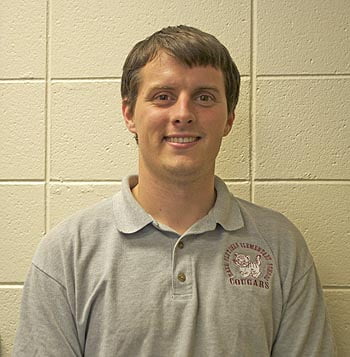
As an educator at Hall Fletcher Elementary School, Brian Randall is on a mission: he is determined to see that all students succeed. “In our school’s culture, failure does not carry a burden, it offers a challenge,” said Brian. “My goal is to foster a safe, friendly, and competitive learning environment.”
Hall Fletcher educators promote the school’s motto— “We are a learning community built around personal discovery—to allow students an opportunity to make responsible decisions for themselves. “Personal discovery” in using the methods of math, science, and technology is embedded into the school’s culture.
Brian grew up in Washington, DC. His strength as an educator is in fostering a positive culture and building character. While he was growing up, he and his father often played chess, in which he was regularly encouraged by his mother.
“I’m not a great chess player,” Brian mused, “but I have improved alongside my students this year. Like many of my students, when I was young I needed a safe outlet to learn from failure, and work on self-control; chess is that discipline that builds character.”
While attending Brevard College, Brian noticed the school had a strong chess program and culture, and he began to play the game every day with his roommate. His professors helped him focus his chess philosophy into a discipline that allowed him the unique opportunity to travel all over the mid-Atlantic and Midwestern states making a documentary about education reform.
For Brian, having that opportunity of personal discovery while in college was the impetus for him in deciding to become an educator. “As I set my course of being an elementary school teacher,” he says, “one of my goals was to start a chess program and incorporate the discipline of chess into teaching.”
Gordon Grant, Principal of Hall Fletcher, added, “The American educator is constantly thinking of ways to close the achievement gap. However, so much of the academic achievement gap does not rest on any particular academic delivery system. Children who often have difficulties with sitting still and being prepared to learn have made great gains by learning the game of chess.”
Many students develop a mindset whereby the strategies and dynamics of chess wonderfully support the academic and educational mission. Students work together to reconsider chess moves and figure out when a crucial mistake was made. This is the mindset that is essential for success in all areas of life: the ability to reflect on mistakes and learn from them.
According to Brian Randall, “The students know I am never going to let them win, and they embrace that challenge. If you are able to develop a plan, you learn optimism; if you are smart, or think you are smart, then you can succeed. These challenges help the student in the areas of focus, self-control, self-discipline, and sportsmanship. We also focus on etiquette, rules, basic tactics, and strategy. They learned a lot about the dynamics of character education through the game of chess.”
He continued, “I love my job. Working with children is so rewarding. Paul Tough from the NY Times articulated it perfectly when he said, ‘For children, chess is the unexpected experience of being taken seriously.’”
“I always tell the children that there is more to you than you know. Ability trumps age, status, economics, and race. Most importantly, when the students take pride in their ability while wearing their chess t-shirts, they always have a big smile when they say, ‘Yes, I can play chess,’ [that] is the only time when losing at chess has brought me greater joy than winning. When 32 pieces and 64 squares help a child realize that, it is incredible!” concluded Brian.