2013, What a Year for NC!












































by Moe White
State News
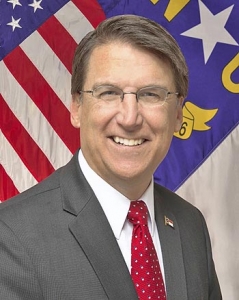
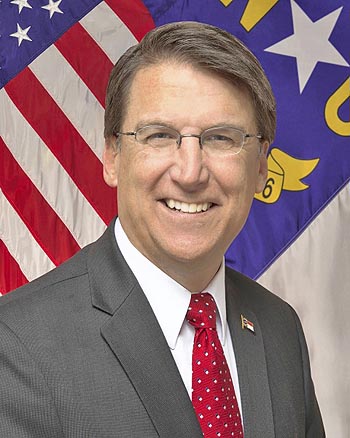
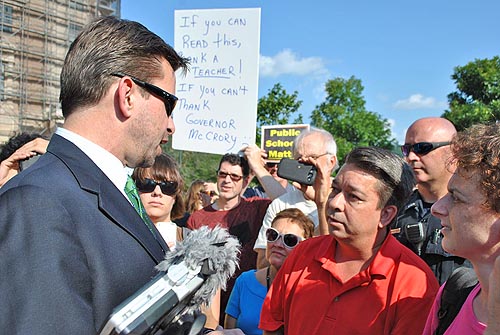
At the beginning of January North Carolina Gov. Beverly Perdue was succeeded by Gov. Pat McCrory, and oh, the difference it made to Tar Heels!
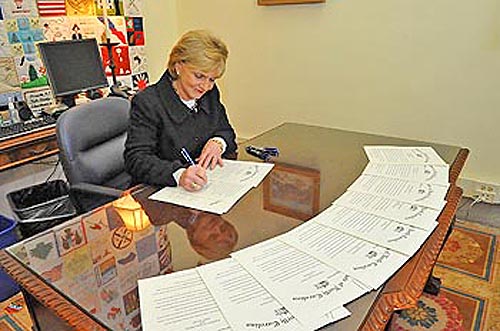
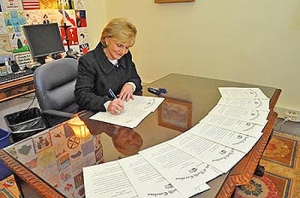
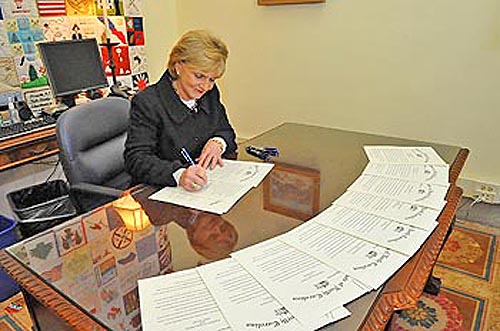
Perdue’s final major act in office was to give the “Wilmington 10” a Pardon of Innocence, reflecting a 1980 federal appeals court ruling that overturned the convictions for “gross improprieties … numerous instances of prosecutorial misconduct,” perjured testimony “known to the prosecutor,” withholding of key documents, and “numerous errors by the trial judge.”
Perdue wrote that notes recently discovered “show with disturbing clarity the dominant role that racism played in jury selection… This conduct is utterly incompatible with basic notions of fairness and with every ideal that North Carolina holds dear.” The Wilmington 10 were activists challenging the city’s approach to desegregating its schools; they were falsely convicted of conspiracy in firebombing a grocery store and collectively sentenced to 282 years in prison.
Perdue’s conscience reflected well on her personal character as well as the quality of her term as governor. In the first summer after taking office, she signed the landmark Racial Justice Act in 2009, which offered death-row inmates their first-ever opportunity to challenge their convictions and sentences if they could demonstrate that racial bias had played a part.
While nearly all those on death row lodged challenges, few were granted hearings, but four sentences of death were commuted to life in prison. Sadly, in one of the most striking contrasts of their two administrations, in June 2013, during the first summer of his term as governor, Pat McCrory signed a Republican-led repeal of the act.
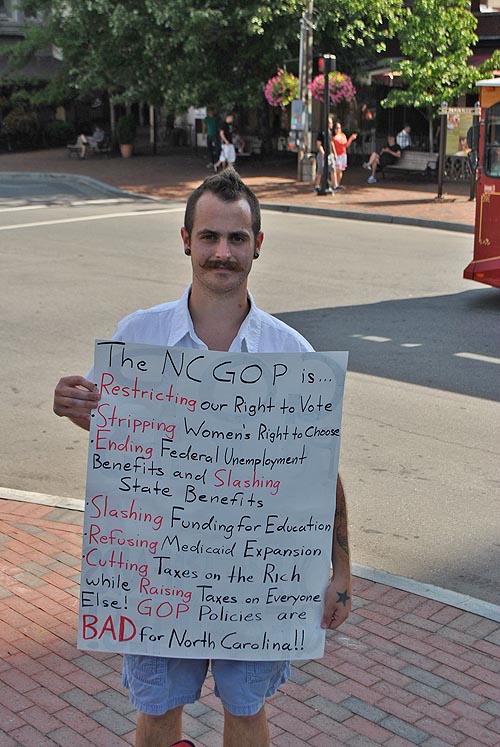
The change of administration brought about many other radical changes to the Tar Heel State in 2013. Long considered the avatar of the “New South,” North Carolina went from blue to red with a vengeance. The legislature and governor undertook the largest redistribution of income since the Gilded Age of the 19th century. Among the changes enacted, they:
• cut the budget by half a trillion dollars
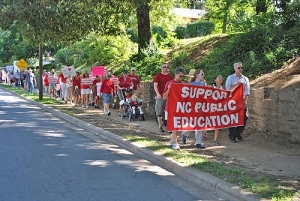
• slashed per-pupil education funding and college funds
• eliminated inheritance taxes on the state’s wealthiest families
• established a “flat tax” rate by lowering the rate on the rich by almost 30%
• increased sales taxes on the poor and middle class (by removing the exemption for food), and
• cut corporate taxes while increasing the tax burden on small businesses.
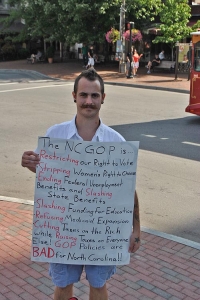
Gov. McCrory rejected the Affordable Care Act (“Obamacare”); he refused to set up a state healthcare insurance exchange, and refused Medicaid expansion that would have brought half a million NC residents healthcare, along with tens of thousands of new jobs. As a result, the federal exchange was put in place and is now being used by NC residents to buy health insurance, many for the first time in their lives.
The legislature also rejected extending unemployment benefits that were to be paid for entirely by federal money (the only state to do so), and cut the maximum compensation from $525 per week to $350—removing 71,000 people from the rolls and taking a billion dollars more out of the state’s economy during the year.
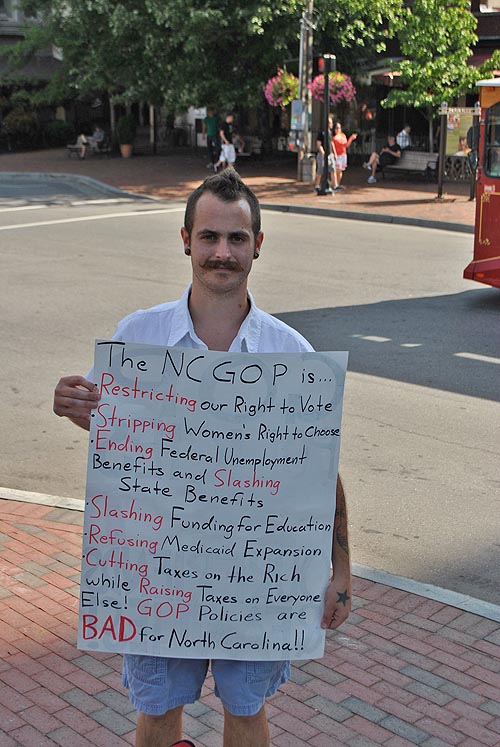
The newly empowered Republicans also enacted the strictest voter ID law in the nation (fully effective in 2016), with the expectation that numerous voter registration changes will keep tens of thousands of likely Democratic voters—students, the elderly, the poor, and people of color—from exercising their franchise.
Provisions taking effect this year include slashing the number of days for early voting, including the final Sunday before election day, eliminating same-day registration and student pre-registration, and allowing anyone in the county to challenge any voter’s right to vote on election day.
The NAACP filed a lawsuit the day the bill (HB 589) was signed into law. At press time, the first hearing on the lawsuit was scheduled for Thursday, Dec. 12 in a pretrial conference in Winston-Salem.
Legislators led by Rep. Tim Moffitt (R-Buncombe County) also mandated that Asheville give up its Water Department with no compensation, having already taken away its airport and the WNC Ag Center; eliminated numerous state and regional agencies; and forced the county to impose a recreation tax.
Land- and power-grabs weren’t confined to Asheville; legislators acted to transfer control of Charlotte Douglas International Airport, the world’s sixth busiest, to an independent authority; voided a negotiated lease of the former Dorothea Dix hospital property to the city of Raleigh for a park; and eliminated the Wake County School Board’s right to control its own buildings and construction.
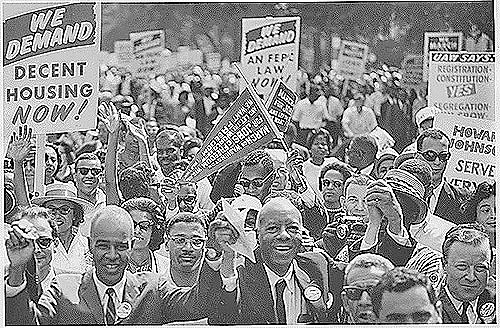
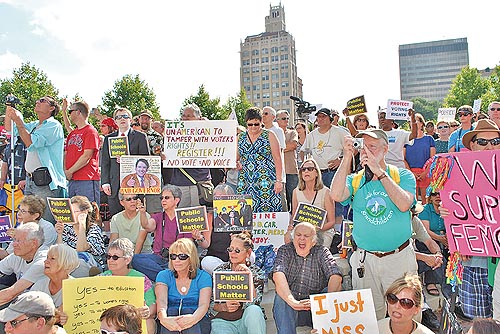
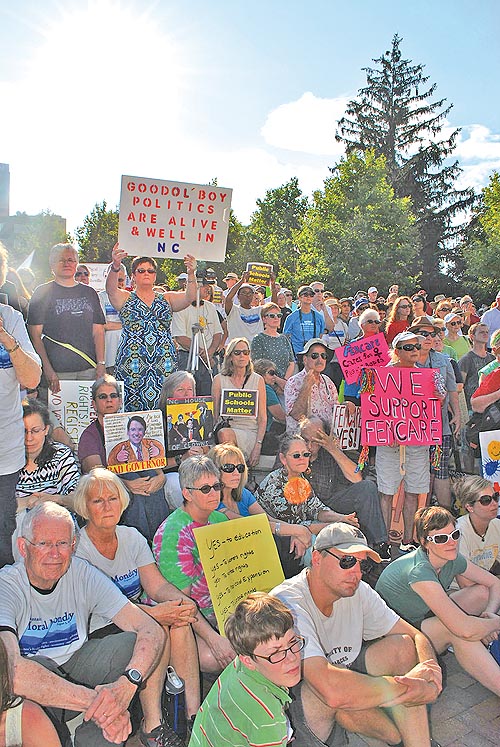
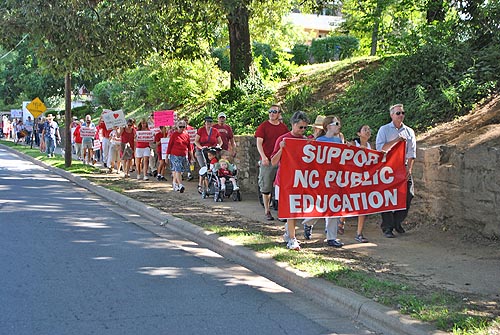
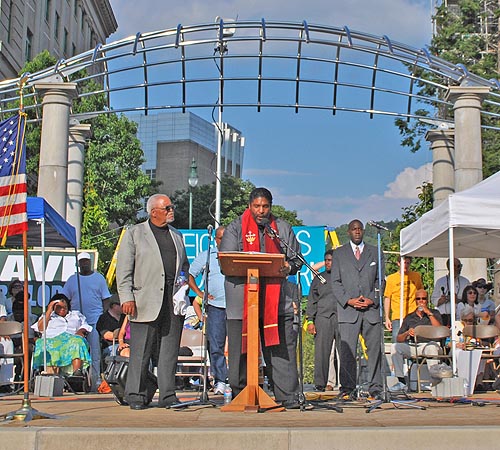
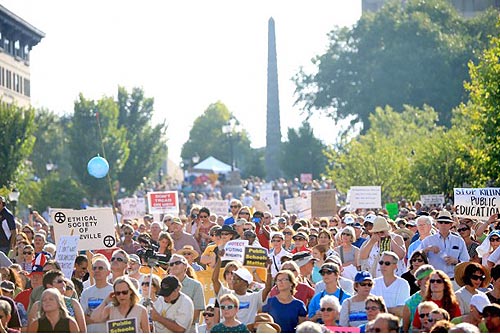
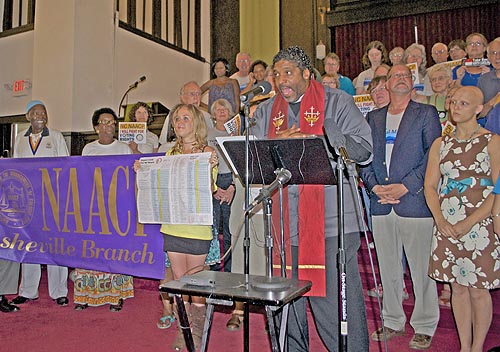
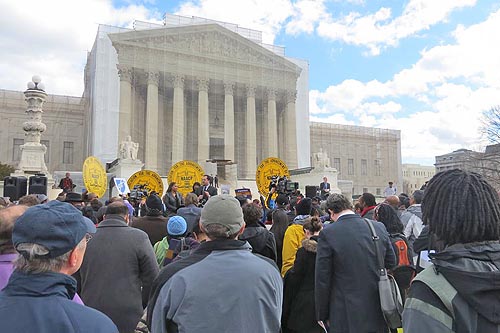
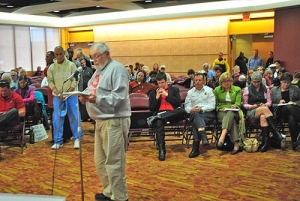
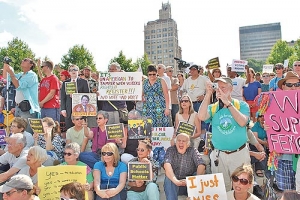
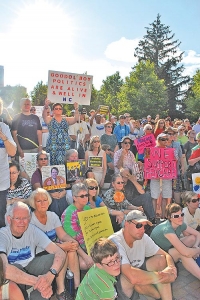
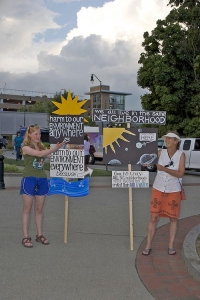
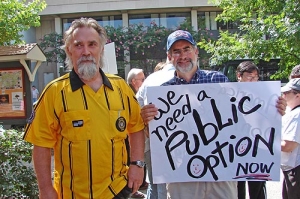
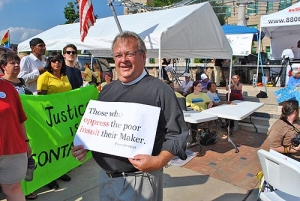
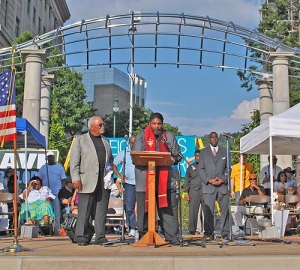
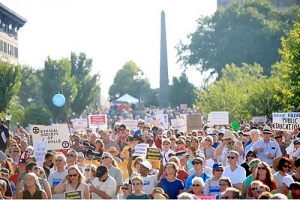
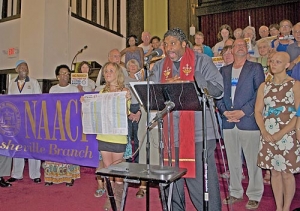
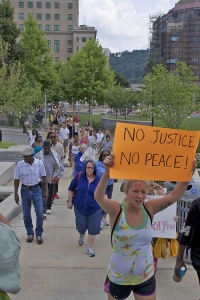
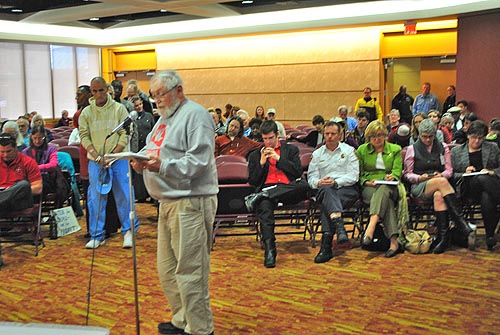
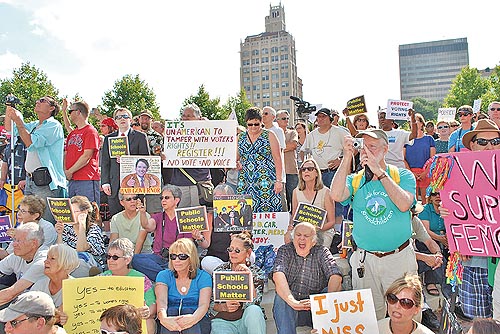
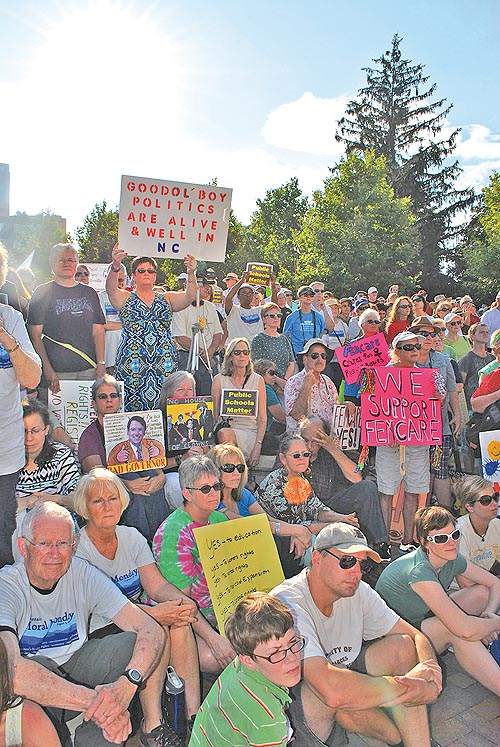
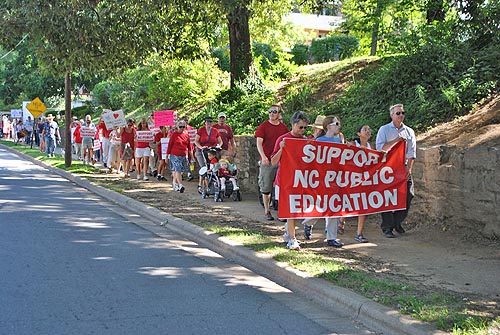
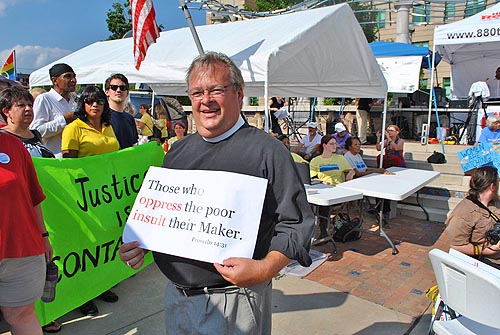
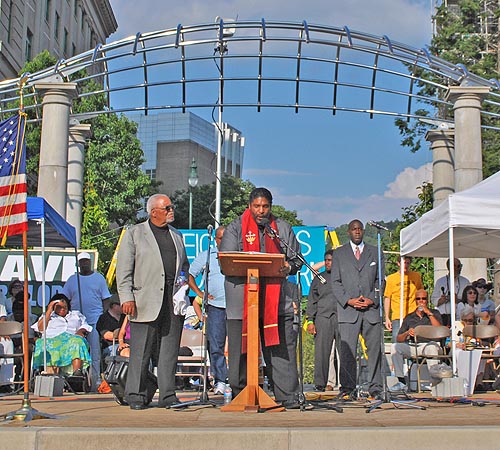
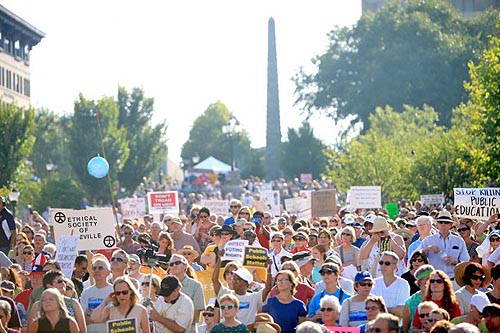
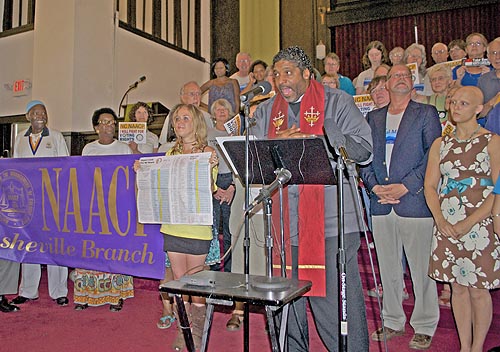
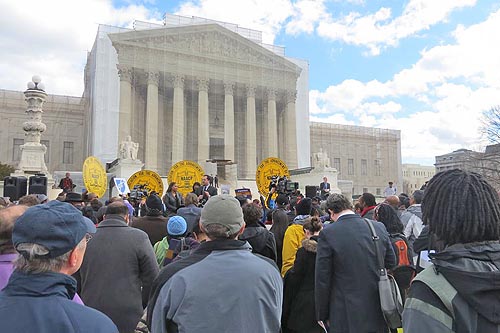
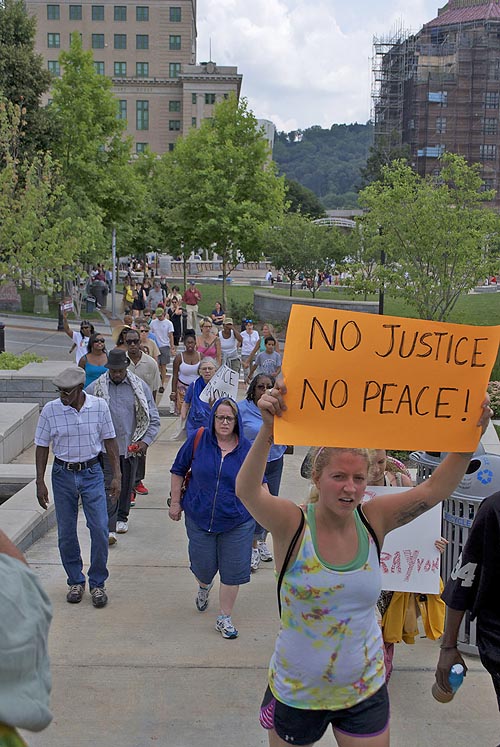
In reaction to the radicalization of the state, a new leader emerged. Beginning in April, Rev. William Barber, president of the NC chapter of the NAACP, led weekly rallies on Jones Street (site of the state capital) against voter suppression laws and tax and other legislative changes that are already severely impacting the state’s residents.
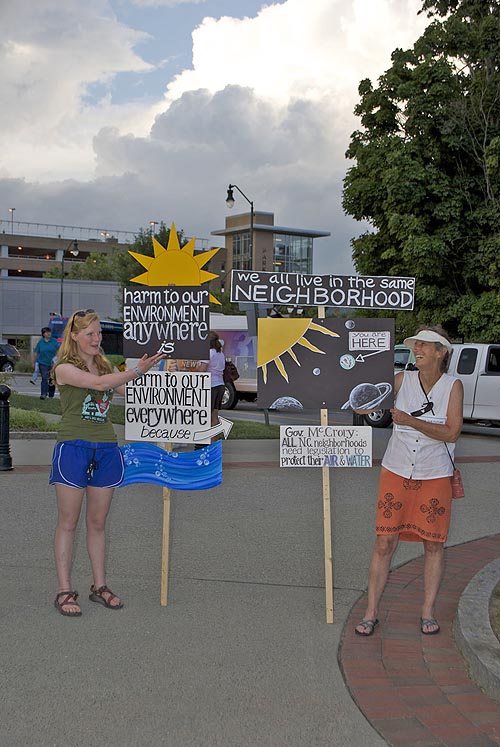
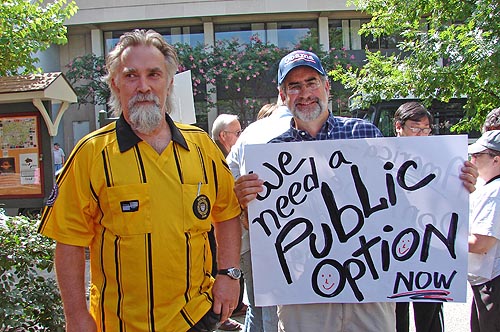
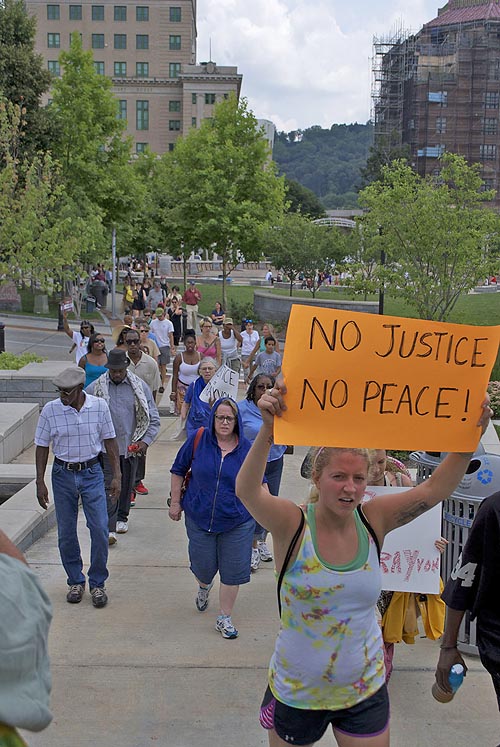
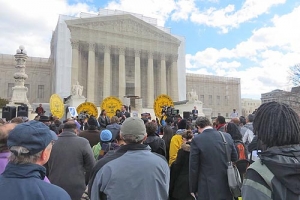
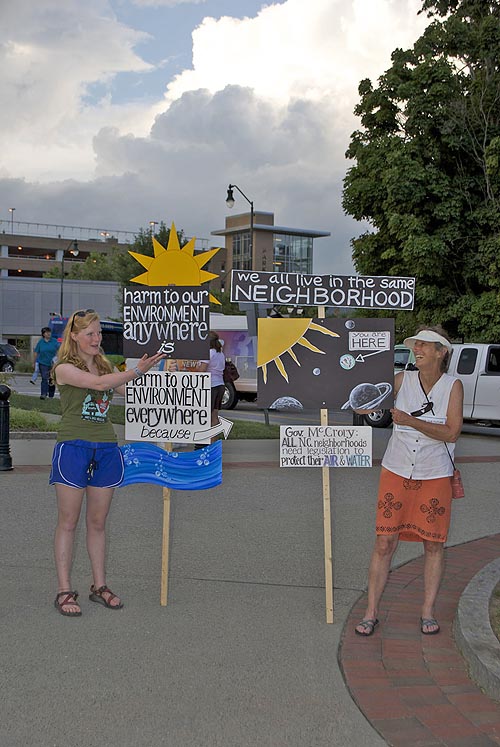
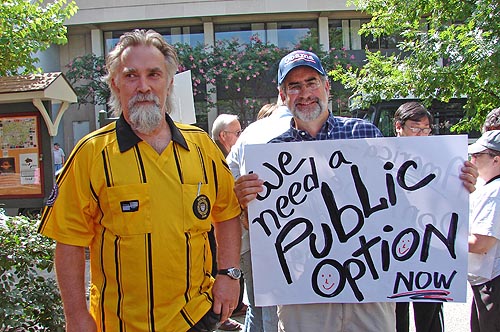
The Moral Monday rallies drew national attention along with thousands of participants in Raleigh, and the largest of all, with 10,000 people, took place in Asheville in August. Conservative African American churches found themselves in common cause with women’s rights and gay rights organizations, environmentalists, healthcare advocates, and civil rights groups in objecting to the takeover of state government by radicals funded, in many cases, by secretive, self-serving multi-millionaires.
International
But 2013 was not all politics. Pope Benedict XVI resigned—an almost unprecedented step—and the world was pleasantly surprised by the election of Pope Francis, the first pontiff from the new world (Argentina) and a radically different pope: one who washes the feet of the poor, embraces gays, and challenges the Vatican bureaucracy as well as the world’s Catholic priesthood to give up ruling in favor of serving, as Jesus did.
And the world grieved in December over the death of Nelson Mandela, one of the century’s greatest leaders and liberators. The South African began life as a foster son who studied law, then became an anti-apartheid activist, spent 27 years in prison (part of it at hard labor), was finally released in 1990, and became the first freely elected president of his country—and an inspiring icon for the world.
National
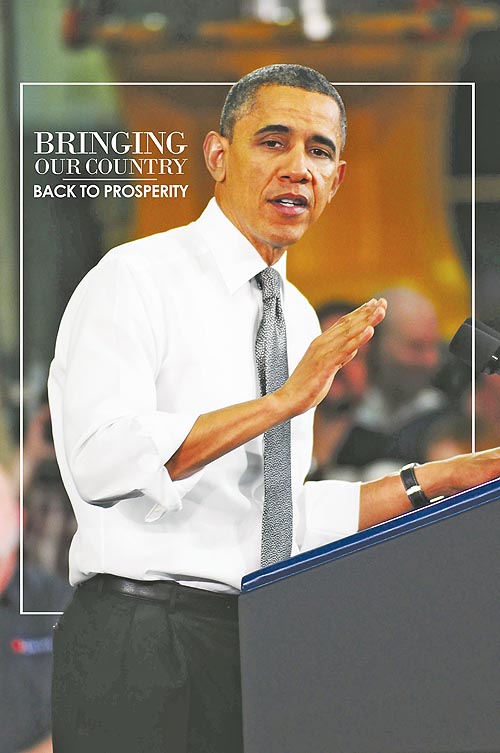
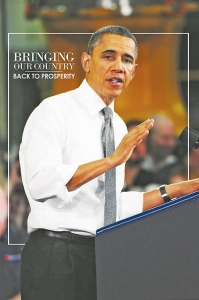
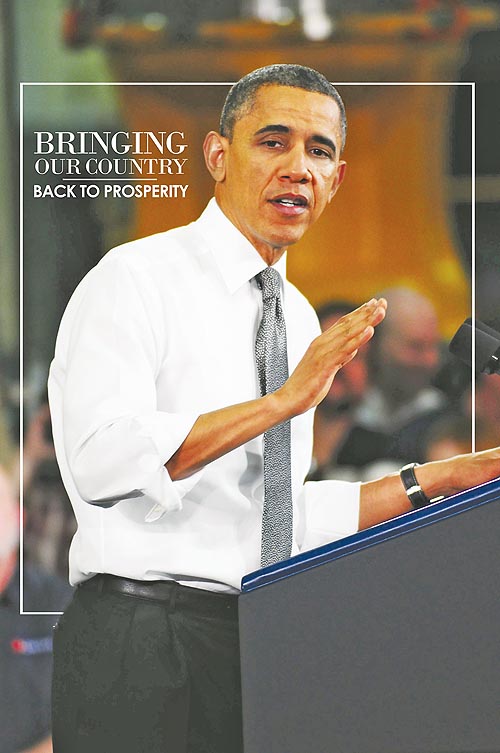
The economy remains a delicate thing, although at this point, five years into his presidency, President Obama has presided over some 48 months of continuous job growth and economic expansion—despite repeated attempts by his political opponents to slow things down (and subsequently blame him for failure). But even as staunch a bastion of Republicanism as The Wall Street Journal reported in December that such growth under the Democratic Administration should come as no surprise.
According to research by economists from Princeton University, the The Wall Street Journal reported, over 64 years and 16 presidential terms, the U.S. economy has grown at an average rate of 4.35 percent when a Democrat was president, but the growth rate was just 2.54 percent when a Republican held the office.
And despite the obstructionism of Congressional Republicans, some positive news about economic policy emerged just days before the holiday break: the House and Senate budget committee chairs announced a tentative agreement on a budget.
Whether it will pass both houses (or even one) is still in doubt; but if so, at least the president will be happy. He praised the agreement as “a good first step,” saying he wanted “a budget that grows our economy faster and creates more jobs—not through aimless, reckless spending cuts that harm our economy now, but by making sure we can afford to invest in the things that have always grown our economy and strengthened our middle class.”
The deal replaces parts of last year’s sequester that harmed students, seniors, and middle-class families and slowed economic growth throughout 2012. The president noted that it includes “targeted fee increases and spending cuts designed in a way that doesn’t hurt our economy or break the ironclad promises we’ve made to our seniors.”
Always an optimist, Mr. Obama called the plan “a good sign that Democrats and Republicans in Congress were able to come together and break the cycle of short-sighted, crisis-driven decision-making to get this done.” But he also called on Congress to extend unemployment insurance and, overall, “make sure our economy works for every working American.
Asheville
• Asheville High School’s Marching Band, led by Teacher of the Year William Talley, was chosen to march in President Obama’s second inaugural parade in January.
• The next month, the president came to town to help celebrate the region’s excellent job growth with the opening of the new Linamar plant in Arden. He touted the fact that after a decade of net job losses under George W. Bush, more than 500,000 manufacturing jobs have been added in the U.S. in 2010, 2011, and 2012. Unemployment in Buncombe County is the lowest in the state at 5.5% as of October.
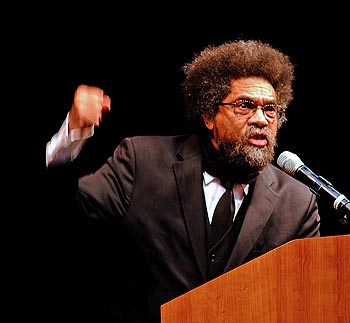
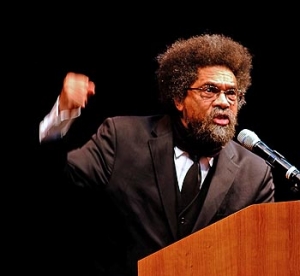
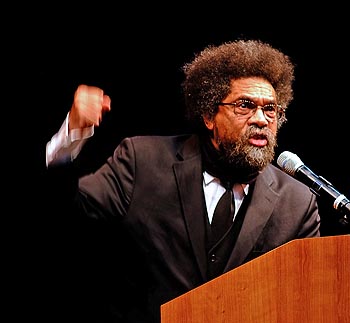
• Dr. Cornell West graced the Sherrill Arena at UNC Asheville with a powerful speech to more than 2,000 in which he challenged many of the assumptions of modern politics, especially those that have led to the widest disparities in income and opportunity, and the highest proportion of American workers in poverty, in three-quarters of a century.
• MAHEC executive Jacquelyn Hallum was chosen in May as the new chairperson of the Asheville City School Board, which soon drew fire for its decision to replace Superintendent Allen Johnson: he was rewarded with severance pay based on the remaining term of his contract, but it was unclear whether he was actually dismissed or had resigned.
• Asheville Police Chief William Anderson was embroiled in controversy when his son apparently tried to cover up his involvement in a car accident.
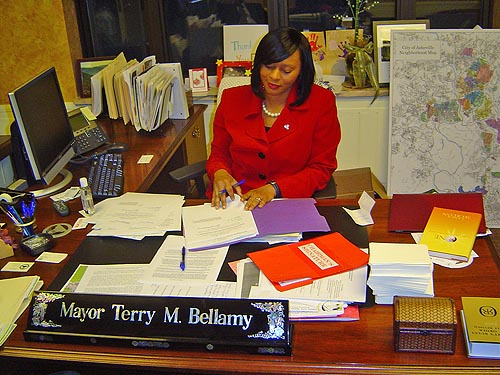
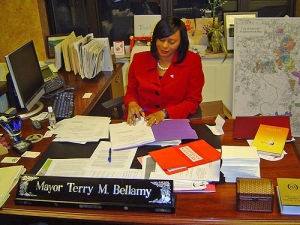
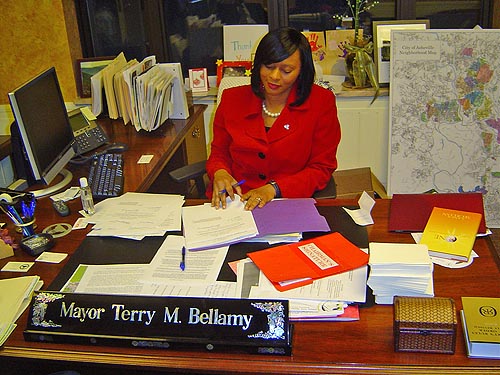
• Asheville got a new mayor, Esther Manheimer, elected to succeed Terry Bellamy at the completion of her two terms.
• City police officer Robert Bingaman died in October when his police cruiser plunged over the side of the Jeff Bowen Bridge in a one-car accident.
• Buncombe County faced more murders and murder-suicides in 2013 (12 in total) than in the several previous years put together (four in 2012, three in 2011).
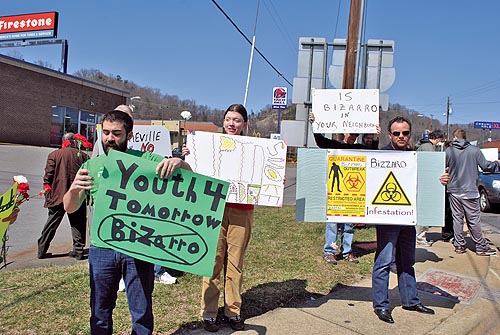
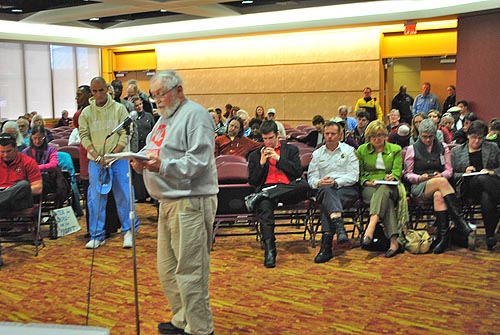
• In response to the Florida killing of unarmed teenager Trayvon Martin, a well-attended series of meetings challenged the city and county to develop ways to ensure that no such incident can happen here.
Weather
Ice in the Arctic Ocean melted to its smallest coverage in recorded history, opening potential sea lanes across the north; glaciers continued to melt at record rates in North America and Europe, and the Ice Shelf in Antarctica broke into yet more pieces, with bergs that could endanger shipping later in the year.
The worst typhoon in history devastated the Philippines in November, and at the beginning December the entire east coast of the U.S., as well as the Midwest from Minnesota to Texas, were hit with icy cold and storms of freezing rain, snow, and ice.
Asheville had the wettest year in the entire history of weather recording, with 12 inches of rain in July alone. (Editor’s Note: It’s a good thing there’s no such thing as global climate change to make things even worse!)
And that’s how the memorable year 2013 came to an end.