The New Economy: Where Do We Go From Here?
by Stack Kenny
After a whirlwind first eight
weeks in office, President Barack Obama’s new administration has laid
out a general outline for a stimulus fix to try to halt a free-falling
economy that has Americans shocked and frightened by prospects of the
next Great Depression.
In his first Presidential address
in February, Mr. Obama sketched a blueprint for an ambitious collection
of programs which he hopes will jump start the economy and return
people back to the millions of lost jobs that continue to fall monthly.
Through a combination of project stimulus spending, tax cuts to small
businesses and middle class workers, and tax increases on wealthy
individuals and corporations, the new administration attempts to offer
an about-face to the past practices of a Republican majority that
aligned itself with blanket deregulation and trickle-down capitalism,
and the mega-wealthy corporations that profited from those practices.
 Having inherited an unprecedented $1.75 trillion deficit from the
previous administration, President Obama signed the $787 billion
American Recovery and Reinvestment Act allocating much needed infusions
of capital into healthcare reform, energy and environmental concerns,
housing and education, infrastructure projects and an immediate supply
of cash to support bankrupt state budgets.
With almost another $1 trillion promised to bail out Wall Street and
the banking industry, and the continuing soaring costs of military
occupations in Iraq and Afghanistan, American taxpayers are being told
we must now fund the largest debt in our nation’s history in order to
get us out of this predicament.
As Americans try to make sense of this complicated economic package to
see how we all might be affected, the only thing that analysts agree on
is that no immediate relief will be available. While we wonder how the
stimulus will play out in Asheville and Western North Carolina, the
President’s outline will not be made more specific until late April.
Even then, most economists predict 2009 will continue in steady decline
and that any hope of turning the tide would not begin to be noticed
until 2010.
For some, these are optimistic figures; while out-of-touch Republicans
decry the package and offer no other solutions, many progressive
economists believe Obama’s stimulus spending will not be nearly enough
to stop a full-fledged Depression. Still, an overwhelming majority of
Americans approve of the new government’s attempt to slow down the
oncoming economic disaster.
Job Creation
With another 700,000 jobs lost in February, plus the millions lost in
the past few months, America is watching with concern as the
unemployment rate approaches 10%. With the prospect of unemployment
reaching 15% by the end of 2009, it is estimated that 10 million new
Americans will be forced into poverty, with 6 million falling into deep
poverty.
Pulitzer Prize-winning economist Paul Krugman suggests the
administration will need to create at least a million new jobs a year
just to keep up with population increases and to keep individual states
solvent as their tax revenues diminish as a result of the ever-growing
unemployment numbers.
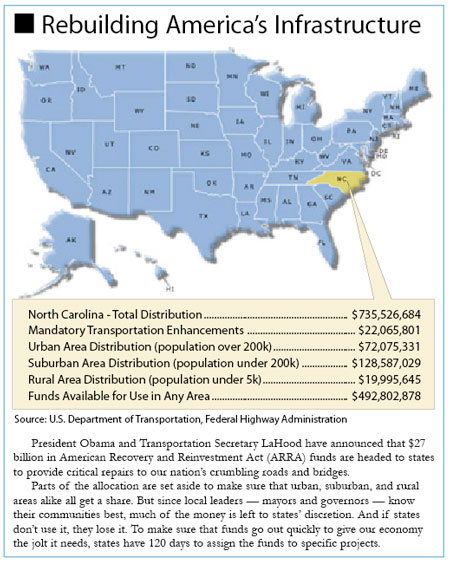
Obama’s policy addresses this major dilemma by pumping billions of
dollars into new jobs to secure the economy, including 1.85 million
jobs by the end of the year, mostly in construction for projects to
rebuild the nation’s infrastructure — an infrastructure that has
seriously deteriorated from 30 years of underfunding.
Additional employment should be available by the infusion of dollars
into the “Green Sector,” creating new jobs in an attempt to address the
troubles surrounding global warming and greenhouse emissions. More jobs
are expected enacting the necessary modernization of the nation’s
electrical grid. The bill also calls for new jobs for teachers and
education administrators, as well as jobs associated with a $19 billion
allocation for updating health information technology.
While almost half of all states are in danger of running out of
unemployment funds, and 4.5 million people are out of work (with only
37% eligible for unemployment benefits), Obama is right to prioritize
the creation of new jobs and extend unemployment benefits, to fire up
the economy and to cut back on the suffering of so many Americans.
 Health Care Reform
The American health care system is in shambles. As Americans lose their
jobs and accompanying health insurance, as medical costs continue to
skyrocket and 37% percent of Americans admit to cutting back on
medicine to save money, it becomes more apparent that something drastic
has to happen to steer the country away from the excessive profit
system of privatized health insurance into a universal health care
system designed to protect all Americans. While our national automobile
manufacturing industry dies a slow death, mostly due to the exorbitant
costs of health care for workers, (along with many faulty narrow-minded
business practices), the need for health care reform soars up to the
top of the list for the new Administration.
Most of the appropriations in the new budget are stopgap measures only,
providing billions for existing state programs, extensions to Cobra
unemployment benefits, additional financing for research and
information technology, and additional funds to prevent cutbacks to
health care providers. But more than financial obstacles may delay
Obama’s drive for universal health care: House Majority leader Steny
Hoyer (D-MD) is quoted as saying there is too much to do before health
reform can take center stage, and probably will not be addressed until
2010 or later.
Education
The new economy pledges to concentrate on a much needed influx of
capital into the education and job training sector. $54 billion has
been allocated just to prevent states from defaulting on essential
education services. Additional billions have been set aside in accounts
for programs serving low-income and special-needs families, including
the highly successful Head Start program. Other funds will be sent into
modernizing schools and upgrading technology and Internet services. A
good portion of the education allocations will be put aside for job
training in such needed areas as health care and green technology.
Additional funds have been given to strengthen college funds, such as
Pell Grants and Hope Credits for families with children in college.
This all seems like common sense. To bolster the quality of life for
Americans, and to insure that true democracy becomes the nation’s
backbone, education must be affordable and equitable for all.
 Tax Reform
Over the past four decades, the gap between the rich and poor has
widened to levels not seen since before the last Great Depression. From
a secure and satisfied middle-class-oriented economy found during the
mid 20th century, the United States has morphed into a nation where
most of the country’s wealth is now controlled by the top 10% of its
earners. We moved from a successful system of taxing profits and not
wages to a “trickle-down, free-market” economy instituted by Ronald
Reagan in 1980, and reinforced by every President since.
Reaganomics heavily taxes worker’s wages but gives huge tax breaks to
the corporations and wealthy individuals who profit from the
simultaneous deregulation of industry. This great wealth was supposed
to create new jobs and “trickle down” prosperity to the workers whose
taxes and cost of living had already greatly increased. We are now
seeing the ultimate results of this greedy and deceitful mentality and
the true cause of the mess Mr. Obama has inherited.
To jump-start the economy and give back some of the dignity working
people have lost to the interests of the wealthy, the stimulus package
has put aside $116.2 billion in tax breaks for Americans making under
$250,000 a year, or roughly 90% of the population. Obama’s proposal
would save the average worker roughly $900 in taxes.
In addition to this base-line tax reform on wages, other tax issues
include expanding incentives and credits for small businesses, first
time homeowners, new car buyers, renewable energy projects, and mass
transit use. There is a long way to go to undo the tax injustice and
income disparity that has taken over the country. Once again, at least
the new economic policy attempts to point us back to a strong middle
class.
 Environment and Energy
As the world’s top polluter and user of fossil fuels, America has
lagged far behind the rest of the world in admitting to our
responsibility for the problems of global warming. The Obama
Administration is facing up to this cold reality by taking an honest
look into the future and recognizing that to keep the planet habitable,
we must be part of the change to reduce greenhouse emissions.
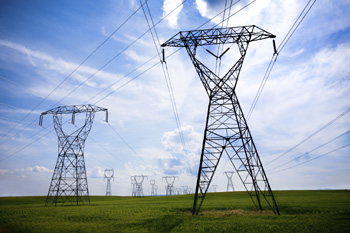
While $11 billion has been set aside to modernize the national
electrical grid, billions more have been put into programs stressing
energy efficiency on the federal, state and individual levels.
Additional funds have been allocated for toxic cleanup projects, water
source projects, and renewable energy research.
President Obama is also a proponent of the “cap and trade” program of
toxic emissions in industry, or the carbon tax, a system used somewhat
successfully in Europe to curtail emissions by charging polluters a tax
and then giving them a polluter’s credit that they can buy and sell.
Famous NASA climatologist James Hansen, who first sounded the global
warming alarm over a decade ago, still affirms that we need greenhouse
gas emissions to be reduced by 80% before 2050 to save the planet. Most
cap and trade theorists set their sites as low as 10%-20%.
Despite money in the new bill for wind farms and green technology it
may be all for naught without a stronger policy on carbon emissions by
coal, oil and other heavy polluting industries. Still, compared to
previous administrations, it’s a start in the right direction.
 Housing
The current economic breakdown has been attributed to the reckless
behavior of the mortgage industry, banks, and Wall Street investors who
bought, bundled, traded and sold people’s houses at inflated prices for
huge profits. The result, as we all know, was that people either bought
or refinanced their houses at prices far above actual values and are
now losing their homes at alarming rates as their true worth is
revealed.
A populist uproar erupted when Congress and the Bush administration
decided to bail out the mortgage industry and not the homeowners.
Although the Obama administration shamefully continues in this policy
of bailouts to the very people who created the problem in the first
place, the current budget proposal also seeks to address some of these
issues by reforming and strengthening Fannie Mae and Freddie Mac, and
asking banks to set up re-mortgage policies that would offer relief to
homeowners facing foreclosure. Other housing initiatives include
financing for Community Development Block Grants, modernization of
low-income housing, homelessness programs and Section 8 housing.
Many critics argue that the appropriations for the millions of families
under pressure of losing their homes is too little and far too late.
But with the rising costs of food and energy, it’s almost impossible to
envision a country of millions of Americans thrown out of their homes
and no means to find shelter. It is imperative that the new economy
immediately works to keep people in their homes.
Where Will the Money Come From?
The American people, where else? Most Americans give between 25% and
35% percent of their income to the government. Most of those funds are
spent on the military, the single largest part of the budget, and a
good portion of it on the social safety nets of Social Security,
Medicaid, and Medicare.
President Obama maintains he will fund the new economic stimulus
programs by taxing wealthy individuals and corporations and by ending
the occupation in Iraq. But as ambitious as his tax plan seems on its
surface, the tax reform actually only rolls back statistics to
pre-George Bush levels, which even then gave the wealthy huge tax
breaks. In addition, these rollbacks will not occur until the current
tax laws phase out at the end of next year.
Having recently put a timetable on removing troops in Iraq, but not for
another 18 months, Mr. Obama followed that announcement with a 4%
increase in the military budget and the promise to keep 50,000 non
combat troops in Iraq while simultaneously committing to deploy more
resources to a renewed military effort in Afghanistan. These numbers do
not include an undisclosed number of military contractors remaining in
both countries, paid for by American taxpayers.
With Obama’s hawkish foreign policy hitting full stride, it’s safe to
say there might not be much money left in the coffers after a partial
drawdown of troops in Iraq. Rep. Barney Frank (D-MA), Chairman of the
House Finance Committee, recently claimed that we would have to reduce
our financial commitment to Defense Department spending by 25% to even
begin paying for the programs included in the stimulus package. It is
unlikely that President Obama would initiate any such commitment. So as
more and more Americans lose their jobs and are unable to pay their
taxes, the most probable funding for the stimulus package will be to
borrow it, from the World Bank, and liquid foreign countries. With
interest. In the American taxpayers’ name.
Uncharted Territory
Many economists have put the American crisis into “uncharted
territory.” Perhaps this is what we finally all have in common: no one
knows how this will resolve, no one knows if the economic stimulus plan
will work, or who will be at the receiving end if it does. Most
analysts agree there will be a waiting line for the money and that by
the time it passes down to the inner cities and small rural communities
that really need it, the money will have passed through so many hands
that we can only hope the appropriations go to the right place and the
right people.
Since the gold standard has been removed as the basis of the American
economy, it is now only public confidence in the worth of the American
dollar that keeps our system alive. This confidence has been profoundly
shaken and now sits in the hands of Barack Obama and his new
administration. Let us hope, and then make sure, that they are up to
the job.