Our Leaders Came To Do Good, But…
 |
| Charles Martinez |
By Charles Martinez
Have African-Americans and other minorities stayed the course of unity, collaboration, and equality? Or, have we, as segmented entities bought into the “what’s in it for me?” mindset of today’s society?
Was Randall Robinson on target when he stated, “Our leaders came to do good, but stayed to do well.”
There have been significant achievements and successes since the Freedom rides, marches, and speeches. Unfortunately, they seem to be fewer and farther between and much harder to identify.
Dr.
King provided not only the leadership and vision needed to spark the
historic and dramatic changes of a past generation, he also coalesced
our actions and energies toward a common goal of unconditional equality
and unification.
Over the course of the past decade, leaders within the African-American
and Latino communities have struggled to pick up Dr. King’s torch and
“continue the journey”. The single-most challenging obstacle to the
success of this effort has been the lack of a unifying message that
addresses the vision of a collaborative process between all segments of
our American community.
As we view the American social and political landscape, we observe a
scarcity of leaders who genuinely convey this message and follow up
with action. Regardless of ethnicity or cultural background, people of
color struggle to name a unifying persona of national scale.
Barack Obama, Colin Powell, Oprah Winfrey, Reverend Al Sharpton,
Condoleeza Rice, Maya Angelou, John Hope Franklin, Clarence Thomas,
Toni Morrison, August Wilson, Carole Moseley-Braun. These names are
easily recognizable to most Americans, regardless of the social
community to which they belong. These individuals are unquestionably
charismatic and distinguished leaders. Without doubt, they have
contributed to the progress and success of Dr. King’s vision for our
country and people. The challenge today is that each leader has carved
out his or her individual niche in the road toward unity.
Each has their own (often redundant) message and methods of achieving the long-range goals.
Within our society today, the common theme has become, “That sounds good, but what’s in it for me?”
Whether discussing athletes, politicians, social reform, or community
initiatives the concept of personal reward or benefit has become a
standard expectation. This is not to call into question the sincerity
or genuineness of these individuals. We must each make our own
evaluation of their sense of purpose and methods. However, when there
is an inherent expectation or hesitation to act until a ‘return on
investment’ is established, the good that could be accomplished becomes
diluted and thus weakened. No community, nation or people can
accomplish significant and effective change if competing agendas and a
lack of collective focus are present. This was the greatest gift Dr.
King gave our country; the vision and focus to work together toward a
common cause.
As we build a collective coalition of leadership and action, we must
recognize the inherent conflicts that will arise. These conflicts will
be differences in chosen or preferred processes and policies. We must
realize and understand the critical difference between conflict and
confrontation. Now is not the time to be timid or hesitate to embrace
diversity of ideas and the creative conflict that it produces.
Surely, Dr. King would advocate no less. If personal agendas are
genuinely set aside, our vision, focus, and direction will once again
become cohesive and collective. Regardless of which ethnic or cultural
community we come from, the goal of inclusive equality should be our
message and the culmination of our efforts.
This leads to another question of conscience. Within your local
community, city, or county, what have you done to build a shared and
collaborative leadership change? We cannot forget that as we “build
bridges”, we also have the opportunity to become a bridge ourselves.
Currently, there is an extremely powerful public service commercial
advocating doing something NOW to help others. It depicts families or
individuals in varying crises. The message of the commercial is that
someone ALMOST did something instead of actually taking action to help.
Dr. King advocated Ghandi’s message that, “We must become the change we
want to see in the world.” I am certain that Dr. King would encourage
and challenge each of us to “Be the Bridge!” Don’t wait for a unity
bridge to be built. Share your experience, skills, and passion now!
Leader is not a title. It is an attitude with the courage to act.
Mentoring a student, sponsoring a community forum, or creating a
collaborative partnership simply require the courage to begin, but they
each build a venue to share the message of collaboration, unity, and
equality. How will you choose to participate?
To paraphrase a well-known quote, “The only thing necessary for evil to
prosper is for good people to do nothing.” Our leaders are good. Our
leaders act. However, they seldom act together for the common good.
Leadership that delivers the dream that Dr. King began must be
inclusive and collaborative. It cannot be for a select constituency or
agenda. The journey is not complete. The road ahead is still long, with
many challenges. Long-term success requires long-term planning and
effort by our entire nation’s best and brightest. As we reflect on the
celebrations and events many of us enjoyed during Black History month,
let us take time to consider the individual accomplishments of our
current leaders and evaluate them within the greater context of an
on-going vision.
Our leaders today will find their own place in history. You have the
opportunity to do the same. How much greater could the story be if each
of us share the same message of collaboration, unity, and equality?
For information on Strategic Leadership, Organizational and workforce
development contact Mr. Martinez, PHR at: (877) 812-3790 or (828)
777-6334.
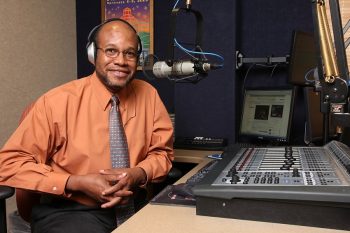
Charles Martinez is the founder and president of the consulting firm,
Martinez & Associates Diversity and Organizational Development.
Charles’ professional credentials as a human resource professional
includes extensive experience developing and implementing corporate
diversity recruiting strategies and training/retention programs
designed to enhance organization performance and productivity.
He has provided organizational consulting, leadership development, and
workforce training across a broad spectrum of industry and business. He
has served on numerous community and professional committees, and is
currently a highly rated conference speaker on Diversity, Recruiting,
and Strategic Leadership Development. Charles resides in the Asheville
area with his wife and daughter.