The Bad Bunny Halftime Show
What America looks like when we are not afraid of each other.
On February 8, 2026, more than 100 million people watched something rare on one of the most contested stages in American culture: a vision of what this country looks like when we are not afraid of each other.
Bad Bunny’s Super Bowl LX Halftime Show wasn’t just entertainment — it was a living argument for a different kind of national identity, one built on shared culture rather than policed borders, on joy rather than suspicion, on love rather than fear.
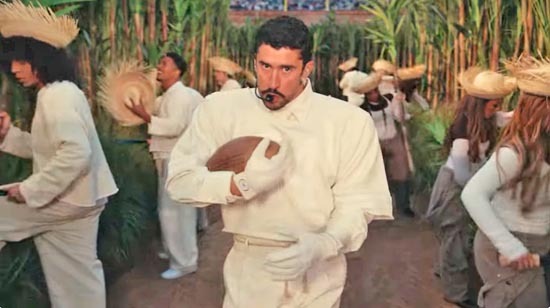
Bad Bunny opened his performance by bringing Puerto Rico — its history, its rhythms, its pride — directly onto the field. His set, described by multiple outlets as a celebration of Latino culture and a “cultural game changer,” blended Spanish‑language hits with imagery rooted in Caribbean life, from sugar cane fields to dancers dressed as field workers.
But the deeper message wasn’t just about Puerto Rico. It was about the entire hemisphere. Flags from across the Americas appeared on the field, carried not as symbols of division but as reminders of shared lineage. In a country where language is often treated as a threat, Bad Bunny made Spanish feel like what it has always been: music.
The performance arrived at a moment when debates over identity, belonging, and language have been weaponized in American politics. Yet Bad Bunny didn’t need a speech to make his point. As one cultural scholar noted, “just him being there is the political message.”
He showed an America where multilingualism isn’t a crisis, where cultural expression isn’t a provocation, and where the presence of Latino artists on the biggest stage in sports is not an exception but a reflection of reality.
A Message Stronger Than the Backlash
Predictably, the show drew criticism from some political figures who called it “a slap in the face to our country.” But the backlash only underscored the significance of what happened on that field. Bad Bunny’s performance wasn’t designed to appease. It was designed to reveal: this is America too — vibrant, multilingual, hemispheric, unafraid.
The moment that will be remembered came near the end, when Bad Bunny held up a football inscribed with the words: “Together, we are America.” It echoed the sentiment that ran through the entire show: The only thing more powerful than hate is love.
In a time when fear is often treated as a political strategy, he offered a counter‑vision — not naïve, not escapist, but rooted in the lived experience of millions of Americans whose identities cross borders, languages, and histories.
For one halftime show, the country saw itself not as a fractured landscape of competing identities but as a shared cultural space. A place where Spanish and English can dance together. Where flags can coexist without accusation. Where joy is not suspicious. Where love is not naïve. Where belonging is expansive.
Bad Bunny didn’t just perform; he modeled a version of America that already exists — in our neighborhoods, our music, our families — but is too often overshadowed by fear.
On February 8, 2026, that America stepped into the light. And more than 100 million people saw it.
Watch the Super Bowl LX Halftime Show featuring Bad Bunny at youtu.be/G6FuWd4wNd8