Jesse Jackson’s Presidential Runs
A Turning Point in American Politics
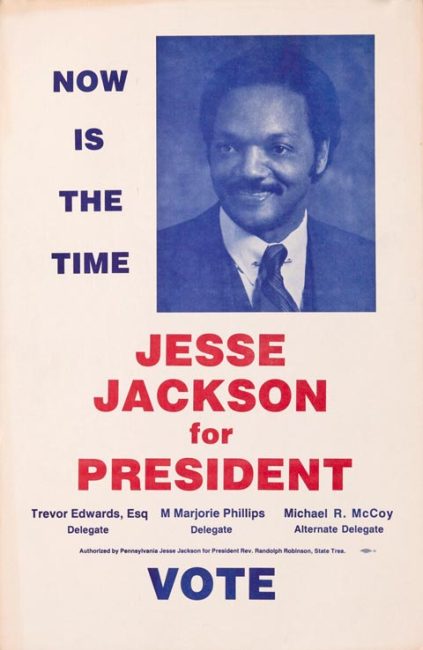 Reverend Jesse Jackson’s presidential campaigns in 1984 and 1988 reshaped the Democratic Party and expanded the possibilities for Black political leadership in the United States.
Though he did not win the nomination in either race, his campaigns mobilized millions of new voters, influenced party rules, and helped redefine the political landscape for decades to come.
The 1984 Campaign: A Historic First Wave
In 1984, Jackson became only the second African American—after Shirley Chisholm—to mount a nationwide campaign for president. Running in the Democratic primaries, he faced a field led by:
- Walter Mondale, former Vice President
- Gary Hart, US Senator from Colorado
Jackson was initially dismissed by many political observers, but he quickly proved to be a formidable national candidate. He ultimately finished third behind Mondale and Hart.
Jackson won 3,282,431 votes, representing 18.2% of all Democratic primary votes cast that year.
He also won contests in Louisiana, the District of Columbia, South Carolina, Virginia, and one of the two Mississippi primaries—an unprecedented achievement for a Black candidate at the time.
The 1988 Campaign: “Keep Hope Alive” and a National Surge
Jackson returned to the national stage in 1988 with a stronger, more organized campaign. This time, he competed against a crowded Democratic field that included:
- Michael Dukakis, Governor of Massachusetts
- Al Gore, U.S. Senator from Tennessee
- Dick Gephardt, U.S. Representative from Missouri
- Paul Simon, U.S. Senator from Illinois
Jackson’s 1988 campaign was far more successful than his first. After a sweeping performance on Super Tuesday, he briefly led the delegate count—an extraordinary moment in U.S. political history.
He ultimately finished second to Dukakis, but his influence on the party was unmistakable. His famous “Keep Hope Alive” speech at the Democratic National Convention remains one of the most memorable addresses in modern political history.
Jackson won 29% of all votes cast in the Democratic primaries—nearly one‑third of the electorate in a year when five candidates each received more than one million votes.
A Lasting Legacy
Jackson’s campaigns did more than break barriers—they changed the Democratic Party itself. His organizing power brought millions of new voters, especially Black voters, into the primary process for the first time. His success also pushed party leaders to revise primary rules to make the process more inclusive.
Until Barack Obama’s election in 2008, no Black candidate had ever run such competitive national campaigns. Jackson’s efforts helped lay the groundwork for Obama’s historic breakthrough.