Honoring Rev. Jesse L. Jackson
The civil rights leader who forced America to confront injustice has passed.
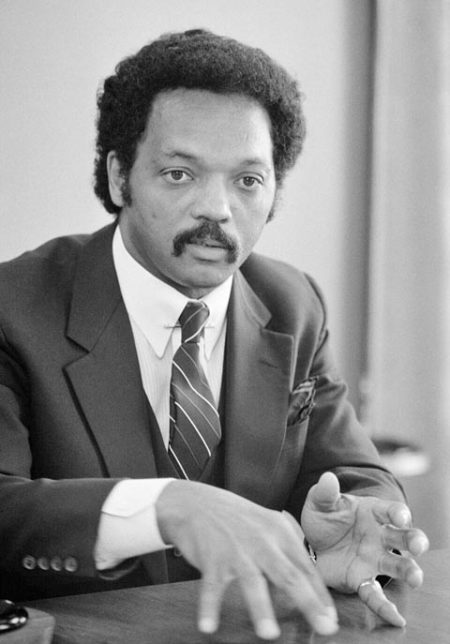
Rev. Jesse L. Jackson, the towering civil rights leader, presidential candidate, and global advocate for human dignity, has passed. He was 84.
For more than six decades, Jackson refused to let America look away from the people it tried hardest not to see. He made it impossible for the nation to pretend that Black people were invisible. He made it harder for us to pretend we were powerless. And at a time when the country was deeply invested in stripping Black Americans of dignity, he insisted on restoring it — loudly, publicly, and without apology.
Born in Greenville, South Carolina, in 1941, Jackson rose from the segregated South to become one of the most recognizable moral voices of the 20th century. As a young lieutenant to Dr. Martin Luther King Jr., he helped lead the Southern Christian Leadership Conference’s economic justice campaigns and was present in Memphis on the day King was assassinated. He carried that trauma, and that torch, for the rest of his life.
In the decades that followed, Jackson built a national and international movement rooted in the simple but radical idea that marginalized people deserved not just compassion, but power. Through Operation PUSH and the Rainbow Coalition, he organized workers, students, farmers, immigrants, and the poor into a multiracial political force long before “multiracial democracy” became a national talking point.
His presidential campaigns in 1984 and 1988 broke barriers and expectations. Jackson didn’t just run for office; he expanded the electorate. He brought millions of new voters into the political process, insisting that the people most ignored by the system had every right to shape it. His message, “Keep hope alive,” became both rallying cry and moral compass.
Jesse Jackson’s Moving ‘Keep Hope Alive’ Speech
Jackson’s influence stretched far beyond electoral politics. He negotiated the release of hostages abroad, marched with striking workers, challenged corporate discrimination, and stood with families grieving police violence. His presence — unmistakable, unyielding — signaled that injustice would not go uncontested.
Even as Parkinson’s disease slowed his body in later years, his voice remained steady. He continued to preach, to mentor, to show up. His life was a testament to the belief that leadership is not measured by titles, but by the courage to speak when silence is easier.
Rev. Jesse Jackson forced America to confront injustice by relentlessly challenging the nation’s denial of systemic racism and inequality. Through his leadership in the civil rights movement, his vocal advocacy, and his ability to mobilize marginalized communities, Jackson made it impossible for the country to ignore the realities of discrimination and oppression.
He used his platform to expose economic, social, and political injustices, demanding accountability and change. His campaigns, protests, and negotiations brought issues of racial and economic justice into the national conversation, compelling America to face uncomfortable truths and inspiring a broader movement for equality and human dignity.
Rev. Jackson made America wrestle with its conscience. He made us confront the gap between our ideals and our reality. And he reminded Black Americans, in moments of triumph and in moments of despair, that our lives, our votes, our dreams, and our dignity mattered.
Rest well, Rev. Jackson. You spent your life insisting that we see ourselves as worthy. The nation you challenged, provoked, and inspired will be reflecting on your profound legacy and enduring impact for generations.