Being Black in America
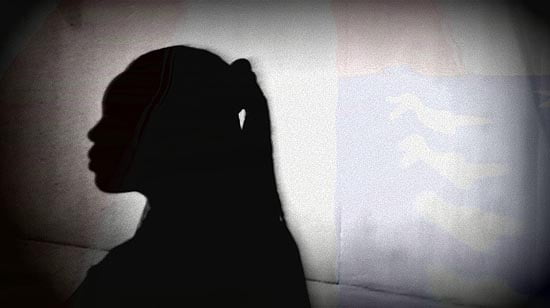 People associate being Black in America with crime and poverty regardless of your status.
There is a myth that if Black folks conduct themselves in a particular way and dress in a particular way, that if we do everything exactly right, if we obey every order, even unreasonable or unlawful ones, we can survive an encounter with agents employed to protect and serve. This is rooted in a belief called, “Respectability Politics.”
Ask Caron Nazario, a Black and Latino man who was dressed in fatigues, heading home in a brand new car, how it actually works. He’ll tell you. Police officers approached Nazario with guns drawn, gave opposing instructions to him, and then pepper-sprayed him, all while threatening him with different charges and levels of violence for non-compliance.
Philando Castile was stopped by the police under the guise of a traffic violation. He’d been stopped 49 times in 13 years. Forty seconds after the police pulled him over, he was dead. He had a child in his car, and his girlfriend witnessed his murder. No criminal actions against the police followed.
Millions of Americans favor exactly this kind of policing. Many among us will believe that the victim was the perpetrator. The most emotionally draining aspect of being Black is having to jump through hoops to prove that you are a normal, trustworthy human being.
As a Black person in America your legitimacy is always questioned. People don’t believe it when we have money. People don’t believe it when we are walking down the street with a hoodie on that most of us have no intention of hurting anyone. People don’t believe it when we are a product of happily married parents. People don’t believe it when we feel that we have been victims of covert racism. People don’t believe that the money we have has been obtained legally.
If a crime is committed and the witness description turns up the words “Black male,” every Black man within twenty miles will have to answer for the crime, regardless of age or specific appearance. A Black man in a suit is viewed no differently than a Black man in a hoodie.
As a Black person in America you try to figure out how not to hate yourself while navigating a society that hates you. You learn to hear racist remarks and not flinch. You learn how to silently rebuke microaggressions. You learn how to mask your emotions. You learn to navigate the system as best you can, using what tools you have to stay safe—and how to make white people feel safe around you.
You learn to be constantly aware of your environment. When I go for walks, I pay attention to the cars passing by. I am always afraid that some motorist will decide that today is the day to run down a Black person.
I’ve experienced a ton of casual racism, some aggressive racism, but not a lot of physical racism. I would say I’m thankful, but I’m angry and sad that anyone has to endure any of this. I rarely feel safe.
Being Black in America is hoping that racism won’t affect your life or livelihood in any meaningful way. It means hoping your neighbor won’t call the police on you for being in your yard or taking a walk in your neighborhood; and your local, state, or federal police won’t kill you for existing.
In the words of Letetra Widman, Jacob Blake’s sister, “I’m not sad. I’m not sorry. I’m angry. And I’m tired. I haven’t cried one time. I stopped crying years ago. I am numb. I have been watching police murder people that look like me for years … I don’t want your pity. I want change.”
“If one is continually surviving the worst that life can bring, one eventually ceases to be controlled by a fear of what life can bring; whatever it brings must be borne. And at this level of experience one’s bitterness begins to be palatable, and hatred becomes too heavy a sack to carry. This apprehension of life, here so briefly and inadequately sketched, has been the experience of generations of negroes, and it helps to explain how they have endured, and how they have been able to produce children of kindergarten age who can walk through mobs to get to school.
“It demands great force and great cunning continually, to assault the mighty and indifferent fortress of white supremacy as negroes in this country have done for so long. It demands great spiritual resilience not to hate the hater whose foot is on your neck and an even greater miracle of perception and charity not to teach your child to hate.”
~ James Baldwin, The Fire Next Time