Striking a Positive Balance
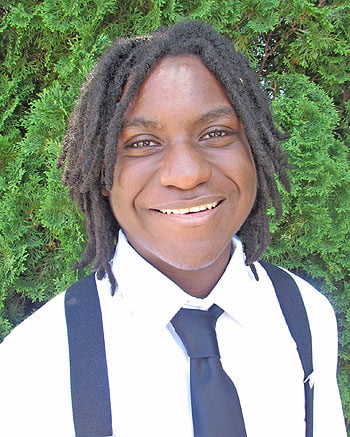
Photo: Urban News
Doriyan Johnson –
Written by Johnnie Grant –
Each generation is shaped by the social, political, and economic views of its day.
Today’s youth are no different—except that they are our first generation of digital natives: many of them do not remember life without the internet.
There’s no question that outside influences have a powerful impact on our children: it’s the natural progression of life. However, when you model and cultivate a child’s direction, it’s rarely necessary to fix something that’s wrong, only to instill a sense of direction that’s right.
In an interview with The Urban News, one young man, Doriyan Johnson, describes how his focus was cultivated and redirected.
“I used to get in trouble at school; I didn’t care for it. I didn’t care much for anything! My mother would always encourage me to set goals, to follow my aspirations, to ignite my ambitions, but I wasn’t sure how to do that; I didn’t see the importance of those things—because I was more interested in becoming a man. The problem was, I didn’t have a man at home to show me what life was about. I just wanted to grow taller, grow a mustache, and grow dreads. I had seen a lot of men with those qualities around me,” said Doriyan.
According to the U.S. Census Bureau, 64% of children in the African American community live in father-absent homes, and many studies have shown that children without father figures in their life try, by necessity, to raise themselves.
“My uncle and grandfather were always around,” says Doriyan, “but they didn’t live with us. They have always loved me and taught me as much as they could. My grandmother, mother, and auntie were there for me too, but it is not the same as having someone just like you (male) in the household. Six years ago my mom met Raf, my stepfather. He’s smart, pays attention to detail, he’s patient and even-tempered, and follows a routine. Over the years, a lot of his guidance has rubbed off on me. He is the biggest male role model in my life. Once he came around, I opened myself up to other positive role models too.”
It was of equal importance that as his mother began to plant her roots in the community, Doriyan notes, “I was introduced to other men who have shaped me into the person I am today. Daniel Suber from Word on The Street has taught me how to be the change I want to see; Sekuo Coleman from Word on The Street showed me how to find art in the most unlikely places. Duane Adams from A-B Tech Coaching Center taught me how to conduct myself and lead meetings, Anthony Thomas at Green Opportunities taught me to keep my head up, and Mr. Roy Harris from the Edington Center taught me how to cherish and love the history of my community.
“All of these men together are helping me grow into the man I wish to be,” he says. “I’m working continuously on my future. I’m graduating from high school in August of 2018 and looking forward to attending Western Carolina University to study business management—and going on to law school.”
The young man concludes, “I hope my story gives other black youth hope. Even though sometimes you may feel the world is against you, if you work hard enough you can beat all the odds.”
As a society, a culture, a community, we must ensure youth and their families have an opportunity to become self-sufficient, productive, and secure citizens. We do this through programs that consciously and thoughtfully cultivate youth with power, guidance, and information that will enable them to make sound decisions and gracefully pass into adulthood.
We must believe that young people can accomplish great things, if given the opportunity and adequate resources. We can invest in young people now, or spend exponentially more later—both in time and money—to address the effects of our neglect.