A Passion for Justice
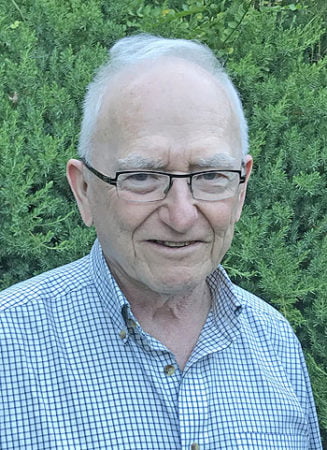
Photo: Urban News
Jim Tobin –
Retired pediatrician Jim Tobin’s polite demeanor disguises a quiet passion for justice that reflects a lifelong struggle against the baggage of a privileged, homogenized childhood.
Tobin grew up in the small town of Ontario, NY, population 600. The middle child of five boys, his role was not to be noticed. But because his father owned a canning factory, a major local business, the Tobins were the important family.
“Any time they needed something, they asked my dad to do it. He was president of the Rotary Club, the firemen, the board of Ed; he did pretty much everything.”
On the other hand, small-town life meant no class stratification. “Your friends come from every background, so I grew up seeing the value of people who had no social standing or economic standing. We all went to the same schools, played on the sports teams together.”
Tobin went to Cornell University in Ithaca, NY, then to medical school at Syracuse University, and an internship in Rochester. Then he began his two-year residency—the final six months of which he spent in Cape Town, South Africa, under apartheid. English was spoken exclusively, and people of color had to live in the artificial townships from which they were bused in to work for whites.
“I was at the Red Cross War Memorial Children’s Hospital. There were mixed patients but they were on separate wards. The Europeans, or Caucasians, had their own ward, and the other wards were for different categories—Bantu for the native black population, ‘Cape color’ for mixed-race, and Asiatic for immigrants from India.”
South Africa woke Jim Tobin up to the situation in the United States.
“They had to do it through apartheid because the population was only about 10% white; where I grew up it was about 90% white. We also lived under white privilege, but we could be much more subtle about it because we were 90% of the population. But there wasn’t that much basic difference—except the severity of apartheid, of course. So I came back very much changed politically and philosophically.”
Tobin’s conscience had already led him to work with local physicians in a migrant labor camp once a week. Over two summers he saw the huge need for medical care in the Finger Links region. After South Africa, he found an opportunity to continue with the migrant health office.
“The migrants were what they called the ‘Eastern stream’—primarily black migrants [who] worked in Florida during the winter, then they’d come up to pick beans, vegetables, apples, cherries.”
“There was a shortage of doctors where I grew up, so we put together funding from migrant-health dollars and community-health dollars and set up a year-round, 24/7 office, and the migrant workers became patients in the office.
“And,” he says with excitement, “a neat thing happened. The population in the rural areas felt so jealous that these people had health care that they demanded the right to go to the clinic, too. So it blossomed: everybody in the area went to this practice.”
Forty years later, it’s thriving, with four separate offices and about 30 doctors. Many participants have Medicaid, some Medicare; and it now operated under the aegis of a local hospital, which naturally helps subsidize its costs.
“We had mixed staffing, black nurses; we did not have any black doctors. We tried to recruit them, but there were too many other opportunities for them, so we couldn’t get them. That was a priority, having black staffing, just for the example of the kids growing up, to see somebody in a physician’s office that looked like they looked.
“But, even though you don’t look like the kids, if you have a white face, you still can encourage the kids. There were two boys from Medicaid families that ended up being doctors. They’d come in, and I’d ask, “How’s school going?” The mom would usually be with them, and of course she’d say, “He’s a real good student,” and I’d say, “Did you ever think of being a doctor?” And two of them carried that out.
Tobin recognizes that his own upbringing still leaves him with baggage. He has twice participated in Building Bridges and volunteered at the Salvation Army Boys and Girls Club over a period of years. He’s active with the Ethical Humanist Society of Asheville and is a volunteer with the sanctuary program of the Unitarian-Universalist Congregation. And, looking at Asheville and its race relations from the perspective of a white, 78-year-old retired pediatrician, he sees a continuing divide.
“It’s still primarily whites with whites, non-whites with non-whites. It was easier in Rochester because we didn’t have Jim Crow. Not that we didn’t have prejudice and separation, but it wasn’t as much of a stigma to be black in Rochester as I think it had to have been down here. It was relatively easy [there] to strike up a conversation, have a casual relationship with someone of a different race.
Tobin makes personal attempts to push through that. In addition to Building Bridges, he has taken an OLLI course called City Within, City Without, covering the huge upheaval of urban removal, the tearing apart of the black commercial district. And to work through “the bilge and stuff from my childhood—the fear, and all the stereotypes”—for three years he patronized the barber shop on the Block.
“While half the patrons were happy to see a white patron supporting a black business, some seemed to resent my being there. I finally concluded that the black barbershop is one of those rare safe havens: every black person basically has to put up with white society 24/7, and here I was, busting in on this place. I ended up thinking that was a very selfish thing I had done.”
Tobin concludes, “I think my number one goal in life is to be the best Jim Tobin I can be. I’ve always felt the need to make things better. Fortunately I was given the opportunity to do that: I was born very privileged, so I could be a doctor, and meet interesting friends who wanted to do the same thing … And you do make a difference.
“You don’t cure the world, but little bits do make a difference.”