Sickle Cell Researcher at Duke Calls NIH Grant Termination “Racist”
Judge says termination of grants was “arbitrary and capricious.”
By Cash Michaels –
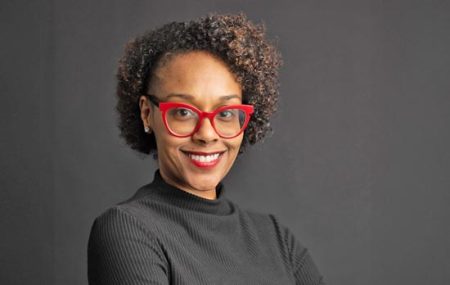
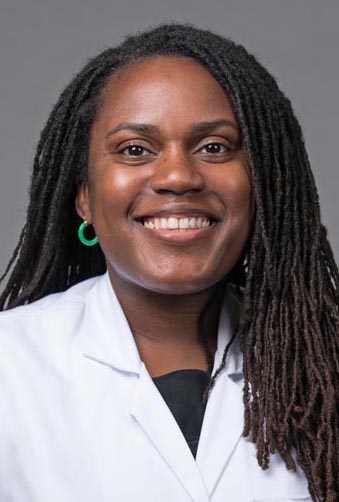
A Black sickle cell researcher at Duke University charges that the termination of her five-year, $750,000 grant from the federal National Institutes of Health (NIH) was racist.
According to NIH estimates, at least 90% of the 100,000 patients across the nation suffering from sickle cell anemia are Black. In this extremely painful blood disorder, red blood cells become sickle shaped, preventing proper flow through the bloodstream. The disease causes lifelong health problems like strokes, infections, and lung problems.
Dr. Charity Oyedeji, a Duke University School of Medicine hematology researcher, told WRAL-TV and other media outlets across the nation that she received a letter from the NIH on June 16 informing her that her grant was being slashed. That was bad enough, but the language used in the missive cited diversity, equity, and inclusion (DEI).
Those words gave Dr. Oyedeji pause. “The words that were used were very non-scientific, very racist,” she said. “Really negative language.”
According to published reports, the NIH letter stated in part, “Research programs based primarily on artificial and non-scientific categories, including amorphous equity objectives, are antithetical to the scientific inquiry, do nothing to expand our knowledge of living systems, provide low return on investment, and ultimately do not enhance health, lengthen life, or reduce illness.”
“I was very sick to my stomach when I first saw it,” Dr. Oyedeji told NBC4-TV in Los Angeles. “… I just could not believe it.”
The NIH letter then added, “DEI studies are often used to support unlawful discrimination on the basis of race and other protected characteristics ICO’s, which harms the health of Americans. Therefore, it is the policy of the NIH not to prioritize such research programs.”
When WRAL-TV asked the Trump White House why the sickle cell grant was being cut, the station reports, “Health and Human Services Communications Director Andrew Nixon said, “The study itself has value; however unfortunately it was funded under an ideologically driven DEI program under the Biden Administration. In the future these types of programs that NIH has committed to fund to help people with sickle cell and other important diseases will be reviewed based on their scientific merit rather than on DEI criteria.”
Dr. Oyedeji isn’t the only one convinced that racial bias played a role in the termination of both her grant and others’ government-funded biomedical research grants. According to the website, Medical Express, “A tracking database shows that more than 2,600 NIH grants totaling close to $9 billion have been canceled since President Donald Trump took office in January…”
On the same day that she received her NIH letter, a federal judge in Massachusetts ruled that it was “illegal’ for the Trump Administration “…to cancel several hundred research grants,” adding that “the cuts raise serious questions about racial discrimination.”
That judge, William Young, said that termination of those grants was “arbitrary and capricious” and did not follow long established rules for doing so. During his hearing, Judge Young called it “palpably clear” that what was behind the government actions was “racial discrimination and discrimination against America’s LGBTQ community.”
After 40 years on the bench, “I’ve never seen government racial discrimination like this,” Young added. As reported CNN, he ended the hearing saying, “Have we no shame?”
Judge Young’s decision addressed the termination of only some of the NIH grants; Dr. Oyedeji’s was not included because it was not part of two lawsuits brought before the judge. Young’s decision is expected to be appealed by the Trump Administration.
However, after the judge’s ruling, The New York Times also reported that “…a senior NIH official “has directed agency staff members not to cancel any additional research projects” in the wake of “two court rulings taking issue with the axing of medical research grants” by the Trump Administration. The internal memo marks a “retreat by the agency,” which has “slashed funding for medical research by ending hundreds of awards.”
The memo, sent by Michelle Bulls, who helps oversee the agency’s external funding arm, reads, “Effective immediately, please do not terminate any additional grant projects.” It also instructs staff members to pause the cancellation of grants that were in the queue to be “terminated.” It is unclear how long the directive will hold.
Nor is it clear how that June 26 directive affects Dr. Oyedeji, who has gone public with her story nationally and on social media in hopes of raising the money needed to continue her research.
But she’s also appealing the NIH decision.“Even small disruptions in research can have really major negative impacts,” Oyedeji told NBC4. “Evidence clearly shows that this type of research prolongs life, improves function—these grants were originally awarded because of their merit.”
Meanwhile, according to the University of Washington news service, “…NIH officials said they were continuing to categorize medical research grants based on whether they included topics disfavored by the Trump administration, even if they were not terminating those grants.”