Community Reparations Comprehensive Harm Assessment
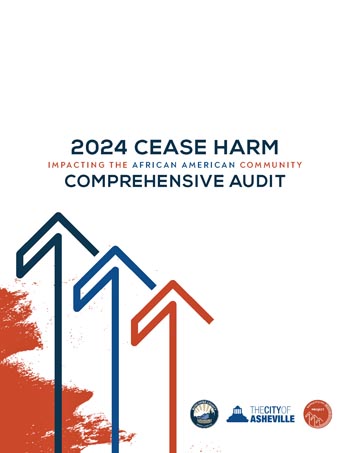 2024 audit recognizes the damage caused by public and private systemic racism.
Buncombe County and the City of Asheville governments’ reparation resolutions aspire to cease the perpetuation of institutional processes resulting in racially disparate outcomes for African American residents.
In 2023, the Community Reparations Commission recommended an audit of internal and external services of City and County government. The recommendation to perform the audit was a critical step in understanding how local government policies and practices are causing harm to the African American community in Asheville/Buncombe County. The audit is intended to be a resource for ceasing harm.
A comprehensive harm assessment of government services, policies, practices, procedures, and compliance with legal mandates was conducted by Carter Development Group to foster inclusive community building practices centered on trust, honor, and respect for African American residents. The results of the audit led to more than 100 recommendations across the impact focus areas and the development of five high-priority inclusive community building recommendations.
- Designate Legacy Communities as Historic Districts
- Increase Jurisdiction to Link Racial Equity Benchmarks to School District Funding
- Develop Procurement Industry & Utilization Dashboard
- Develop a Black Chamber of Commerce
- Conduct Buncombe County Disparity Study
The assessment unveiled racially disparate practices harming African American residents within various sectors, including criminal justice, economic development, education, health and wellness, and housing. The impacts of racial harm extend beyond one area of life and infiltrate various settings and stages of life that comprise the social determinants of health.
Buncombe County and the City of Asheville governments and their residents can greatly benefit from the recommendations, which foster inclusivity and equity and center the African American community with opportunities for healthier outcomes across criminal justice, economic development, education, health and wellness, and housing. The study also reviewed the operational outcomes of the County and City’s internal workforce/human resource operations and equity and inclusion offices.
A significant harm was the lack of data-driven practices in key government functions, which created a tangible vagueness in understanding the full impact of these practices and outcomes. Consequently, this highlighted the need to cultivate racially intelligent practitioners equipped with a mature equity lens to guide data collection and determine relevant metrics for the governments.
The report presents a profound opportunity for the Buncombe County and the City of Asheville governments to engage in transformative initiatives toward equity and justice. Impact Focus Area teams comprised of Commission Members and community members are reviewing the audit recommendations in their respective subject areas.
A link to the audit can be found at at publicinput.com/avlreparations.
The full audit report is available at publicinput.com/Customer/File/Full/89385ddb-1e4a-4cd9-8ba7-8878d7f77f8b.