What Do NC GOP Election Victories Mean for Black Issues?
A return to the ‘ole-school’ conservative decision making that controlled North Carolina in the past.
By Cash Michaels –
The next time Democrats or progressive groups argue that a redistricting map is unfairly drawn by the Republican-led NC General Assembly, and want to take the issue to higher court, a Republican-led NC Court of Appeals or a GOP majority state Supreme Court will be waiting to hear the case.
That’s the scenario last week’s November midterm elections produced: a Republican supermajority in the NC Senate, four more Republican judges elected to the NC appellate court (now holding 12 of 15 seats), and two more Republicans elected to the NC Supreme Court, making that judicial body 5-2 Republicans to Democrats.
State Supreme Court associate justices are elected to eight-year terms.
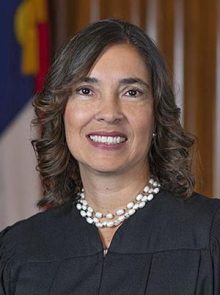
The two Democratic associate justices are Michael Morgan and Anita Earls.
The next time there will be an election for the state Supreme Court will be in 2028, but it will be a Democrat-held seat up for re-election.

“The ramifications are substantial,” former state Sen. Floyd McKissick, first vice chair of the North Carolina Democratic Party told WRAL News. “They are profound with the issues in front of the court and what it could mean in terms of rights.”
In short, the Republican-led legislature now truly has carte blanche to pass any legislation it desires, and in his final two years in office, Gov. Roy Cooper can’t veto or do a thing about it, other than go to the bully pulpit.
The state House is one vote shy of a supermajority, meaning either the Republican majority there finds a moderate Democrat to join them, or wait for any Democrat House member to be absent, in order to have the numbers to override Gov. Cooper’s veto.
Either way, Cooper’s power over the GOP-led legislature is now tenuous at best.
If Common Cause NC or the NC NAACP wants to take Republican legislative leaders to court, they may get a favorable hearing in Superior Court, but if they lose there and dare to appeal to the Republican-laden state Court of Appeals or Supreme Court, the likelihood of a favorable hearing now is less likely.
“With the heavily populated Republican domination of the Court of Appeals and the Supreme Court, there will be a more right-wing conservative application of North Carolina law than we have experienced in the past few years,” says NC NAACP Legal Redress Committee Chairman Irving Joyner. “Legal decisions which address the ability of people to vote, to participate in the political franchise and efforts to expand the powers of the Republican party will be resolved in favor of the General Assembly and the Republican leadership.”
Atty. Joyner continued, “You can expect a dedicated reluctance to expand the constitutional protections and rights of people in criminal cases and a loosening of restraints on the ability of the business community to exploit its dominance within the political and economic areas.”
“In education,” Joyner continued, “there will be continuing support for the General Assembly to short-change the financing of the quest for well-funded, quality, and progressive educational initiatives. As a result of the Republican Party’s success in seizing control of the judiciary and the General Assembly, there will be a return to the ‘ole-school’ conservative decision making that controlled North Carolina during the past Jim Crow era. None of this bodes well for African Americans, people of color, and those individuals who are locked in low wealth communities.”
Now take all of the above from the theoretical to the practical.
A case involving the voting rights of former felons was put off until 2023 by the current state Supreme Court. Now that case will be considered by the new Republican-led court.
The current Democratic-led state Supreme Court decided that funding should be transferred to low-wealth public schools per the recent Leandro-decision. Will the new Supreme Court find a way to dash that decision?
And, a final ruling was expected on a recent congressional redistricting case. A decision is expected in December, but if that doesn’t happen, it falls in the lap of the new high court as of January 1, 2023.
This will be the new political reality for African Americans and Democrats in the coming years.