This (Legislative) Report Card Indicates Progress Needed

Photo: Tim Barnwell
Legislative News by Nelda Holder –
I keep thinking there needs to be a grading system for the North Carolina General Assembly.
For example, this ostensibly august body has for the past two years failed in its duty to deliver a budget for the state, relying instead on a generous quirk in state law that provides for a continuing budget when a new one has not been passed. And speculation now is that it will take at least two more months in this lengthy session (rife with overtime pay) before we might see some results.
The General Assembly, for some 15 years, has also failed to meet the legal mandate to fully fund our public schools—a longstanding demand in the state court’s Leandro decision (Hoke County Board of Education v. State, also known as Leandro v. State. The case was decided by a unanimous NC Supreme Court vote in 1997 (by which time the City of Asheville and the Buncombe County school systems had become intervenors). The fight for full funding has been going on ever since.
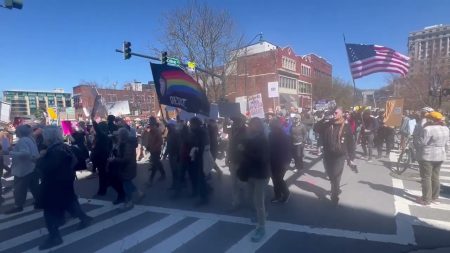
The current Republican-majority Legislature—a majority that has existed for over 10 years—has offered us gun permit repeal (vetoed by Governor Cooper), an anti-protest bill (HB 805) which steps on such civil liberties as free speech and the right to assemble (now awaiting approval or veto); and the legalization of “sports-betting,” otherwise known as sports gambling (SB 688).
Interestingly the gambling bill has been pushed through the Senate by leadership despite a lack of support from their own party members. Fifteen Republicans voted against it and 17 Democrats voted in favor. The socially conservative NC Family Policy Council has spoken out in opposition to sports gambling. Quoted by WECT News in Cape Fear, the group’s president, John Rustin, said: “All of those social issues, those problems that come along with gambling are what we’re truly concerned about. Obviously because it’s a gambling bill, there is massive financial interest behind this legislation.” The NC House will now decide what happens next.
One brief shining moment
Voting rights advocates in the state had a brief moment of relief and excitement when a three-judge panel of the Wake County Superior Court opened the way for some 56,000 state citizens with felony convictions to regain their right to vote while on parole, probation, and post-release supervision. Their return to society, in other words, meant a return to the opportunity and responsibility of voting.
But the injunctive order issued was then quashed by a higher three-judge panel at the NC Court of Appeals—in court action that included some Republican legislative leaders as defendants. This ruling was immediately appealed to the NC Supreme Court. [See related story by Cash Michaels, p. XXX]
Critical (of) race theory, anyone?
Our General Assembly passed HB 324 by a vote of 61-41 in the House and 25-17 in the Senate, and at the time of this writing it lay on the governor’s desk for an ostensibly final decision. Expectations are that the governor will veto the bill, and there does not appear to be a possible override of that in the General Assembly.
What, exactly, is HB 324? Well, ostensibly it is the “Critical Race Theory” bill, but it does not mention that term. And ostensibly it would ensure “dignity and nondiscrimination in schools,” but—at least in this author’s opinion—it does not respect the dignity of education itself, which should produce its own “nondiscrimination” when supported appropriately.
First, let’s understand the term. The American Bar Association explanation, penned by Janel George (“A Lesson on Critical Race Theory,” January 11, 2021), notes that in 2020, President Donald Trump issued an executive order excluding from federal contracts “any diversity and inclusion training interpreted as containing ‘Divisive Concepts,’ ‘Race or Sex Stereotyping,’ and ‘Race or Sex Scapegoating.” This included “Critical Race Theory” (CRT) as “divisive.”
This led to a campaign by the American Policy Forum and legal scholar Kimberlé Crenshaw (who coined the term “CRT”) to expose the harm in the Trump order, which then garnered the support of some 120 civil rights organizations and led to a federal lawsuit alleging violation of free speech, equal protection, and due process.
CRT, in this context, is a “practice of interrogating the role of race and racism in society” that first emerged in the legal world but spread to other fields of “scholarship.”
HB 324 begins by declaring that the NC Constitution “recognizes the equality and rights of all persons,” and then tells the schools that they’d best be all about respecting the dignity and rights of others, including the rights to express differing opinions and defend intellectual honesty and freedom of inquiry and instruction. Oh, and they’d also best be promoting “teaching methods and procedures to further that intent.”
That “promote” word, the bill then says, “shall mean compelling students, teachers, administrators or other school employees to affirm or profess belief in certain concepts thereafter spelled out by this legislation. It feels really important to know what on earth they’re talking about, but they then give us a list of “forbiddens,” including the promotion of such concepts as:
- One race or sex is inherently superior to another race or sex.
- An individual, solely by virtue of his or her race or sex, is inherently racist, sexist, or oppressive.
- An individual, solely by virtue of his or her race or sex, bears responsibility for actions committed in the past by other members of the same race or sex.
- The rule of law does not exist, but instead is a series of power relationships and struggles among racial or other groups
- All Americans are not created equal and are not endowed by their Creator with certain unalienable rights, including life, liberty, and the pursuit of happiness
With that under their belts, public schools are to notify the Department of Public Instruction and make general information available on their websites, at least 30 days prior to such educational efforts as:
- Providing instruction regarding concepts included in the “forbidden promotions” list.
- Contracting with or hiring speakers, consultants, diversity trainers for the purpose of discussing concepts described in this section or discussing concepts as speech protected by the First Amendment; utilizing materials as part of course instruction that include history of an ethnic group (as described in appropriately adopted textbooks/materials); the “impartial instruction on the controversial aspects of history.”
- Contracting with, hiring, or otherwise engaging speakers, etc., who have previously advocated for the concepts described in the subsection above.
Note: The above shall not apply to the following stated examples (not the complete list): speech protected by the First Amendment; utilizing instructional materials that include the history of an ethnic group (as described in appropriately adopted textbooks or materials); the impartial discussion of controversial aspects of history; the impartial discussion of the historical oppression of a particular group of people based on race, ethnicity, class, nationality, religion, or geographic region.
Are you confused yet? We’ll spare you the subsection on curricula, reading lists, seminars, and workshop trainings.
My point here is that teachers in North Carolina are trained in education through a state-approved program, and are required to have a bachelor’s degree plus state-approved teacher preparation program, specialized exams and a background check submitted before they can be certified. (These requirements do NOT apply to the Legislature’s dole of money through its ever-increasing voucher program, which demands no such thing as certified teachers in the private schools those vouchers pay for.)
So when the teachers are trained and certified in “educating,” and most of the legislators are not, exactly what is the point of this attempt to micromanage? Your guess is as good as mine. We could pretend it is “much ado about nothing,” but my personal opinion is that it is more sinister. Those three little words, “critical race theory,” scared a lot of legislators who seemingly would like to expunge the word “race” from the state’s vocabulary—without examining its role or its history or its applicability.
Hopefully the speculation is correct, and HB 324 will be exorcised by the veto pen.
Texas and the rights of women
In case you’re wondering, the US Supreme Court’s lack of consideration of the Texas law that penalizes women and their doctors or friends or advisors or aides in the case of a legal abortion beyond the point of a fetal heartbeat (around six weeks) does not appear likely, or even possible, to show up in the NC Statehouse as a proposal for this state at this point in the legislative session. But that doesn’t mean it isn’t being talked about for the upcoming campaign trail. We’ll keep an eye on proposals and campaign rhetoric.
Oh, no you don’t
Legislatively approved bills that fell—provided there is no override—to the governor’s veto this past month included the following.
HB 352 (Motel Tenancy): This bill would have pushed inns and hotels into the category of “transient occupancies,” thus removing the protections of “tenancy” that currently exist. It applied to “transient occupancy” on a basis of fewer than 90 consecutive days. According to Gov. Roy Cooper’s veto, “This legislation … removes legal protections and allows unnecessary harm to vulnerable people, including families with children, who have turned to hotels and motels for housing in a time of need.”
HB 398 (Repeal of Pistol Purchase Permits): This simple bill removed the current requirement to obtain a pistol purchase permit in the state. Cooper’s veto indicated that at a time of “rising gun violence,” the current permitting process helps to reduce homicides and suicides and to reduce the availability of guns for criminal activity. He encouraged the Legislature to “focus on combating gun violence instead of making it easier for guns to end up in the wrong hands.”
SB 636 (Privacy of Charitable Donors): The Senate decided to hide the identity of any person donating money or other tangible goods “if the person has notified the nonprofit corporation … not to disclose the person’s identity.” (Exceptions would be disclosures required by state or federal law, criminal investigations, or orders of the court.) The governor’s simple veto read: “This legislation in unnecessary and may limit transparency with political contributions.”
HB 729 (Charter School Omnibus): This bill reconstituted the NC Charter Schools Advisory Board by removing the requirement that two members who are charter school advocates be appointed by the State Board of Education, reducing that to one appointment and adding the requirement that the State Superintendent of Public Instruction (or designee) be board member and secretary. Cooper’s objection states: “The State Board of Education is constitutionally and statutorily charged with administering children’s education in state public schools, including charter schools,” thus he deemed it “critical that the Board have both of their appointments to the Charter School Advisory Board to carry out their constitutional duties.”
Nelda Holder is the author of The Thirteenth Juror – Ferguson: A Personal Look at the Grand Jury Transcripts.