Here We Go Again
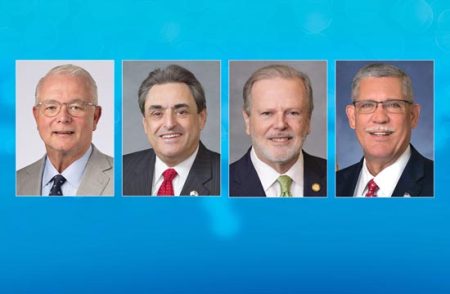
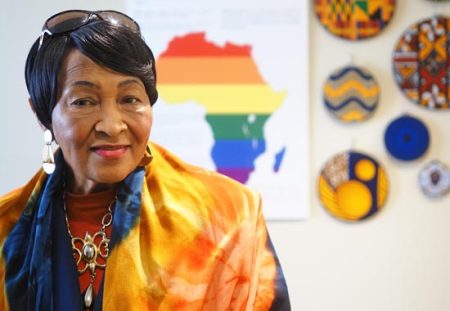
“Once again, state redistricting leaders have failed North Carolinians by redrawing voting districts for political gain and depriving voters of color of their constitutional rights to fair political representation,” declared Allison Riggs.

Photo: Tim Barnwell
Legislative News by Nelda Holder –
The Statehouse Redistricting Merry-Go-Round.
If you want to read an interesting legislative bill, try this one: Session Law 2021-174, Senate Bill 740. It’s basically 15 pages of numbers. Those numbers are grouped into 14 new Congressional districts for the state of North Carolina and represent state voting districts.
Boil them all down, and SB-740 has handed us another lawsuit. Which isn’t terribly surprising since we just spent the better part of 10 years involved in legal battles over the last redistricting from the 2010 census.
According to the (delayed) 2020 Federal Decennial Census count, North Carolina gained one Congressional district, so all 14 are newly mapped by the Republican-dominated Legislature (see accompanying map) in a process that once again raised eyebrows and swiftly brought on a legal challenge from the Southern Coalition for Social Justice (SCSJ). The suit was filed on behalf of the NC NAACP, Common Cause, and individual voters.
“Once again, state redistricting leaders have failed North Carolinians by redrawing voting districts for political gain and depriving voters of color of their constitutional rights to fair political representation,” declared Allison Riggs (SCSJ’s co-executive director and chief counsel for voting rights) in an organizational statement.
And in a separate statement, Deborah Dicks Maxwell, president of the NC NAACP declared: “Lawmakers’ supposed ‘race-blind’ redistricting process is rigged to reduce the strength of our votes, silence our voices, and negate decades of struggle and sacrifice for fairer maps. You can’t represent all of North Carolina if you claim not to see us.”
From Common Cause, executive director Bob Phillips declared that legislative leaders engaged in a “needlessly rushed redistricting process that has failed to allow the public to meaningfully participate … crafting maps that would unconstitutionally deprive Black voters of a voice in choosing their representatives.”
Game on.
After a very brief period of public review, the new redistricting maps approved on November 4 split the state’s 14 new districts into an anticipated 10-4 or 11-3 advantage for Republicans. That would be in a state that has approximately 2.5 million registered Democrats and 2.2 million registered Republicans (plus 2.4 Unaffiliated). A body would be hard-pressed not to call that a partisan decision. Not that Democrats, when they held the leadership positions in the General Assembly, drew angelically inspired districts, although it’s generally acknowledged that the results were not quite as blatant.
And now, we’ll see what the courts think about it all.
From a Different Perspective
It is somewhat startling, and edifying, to look at our voting districts from that registered-voter based vantage point instead of overall population. By juxtaposing the 14 newly mapped districts against this state’s actual voters—as opposed to the census count of residents—a very basic picture of imbalance could be perceived.
It will be voters, after all, who elect our Congressional delegates—so let’s consider for a moment just how the numbers of registered voters actually break down in this state, according to statistics from the NC State Board of Elections as of November 6, 2021:
Registered Voters………………. 7,158,218
Democratic Voters…………….. 2,491,840
Republican Voters…………….. 2,175,222
Libertarian………………………………… 47,282
Unaffiliated…………………………. 2,443,874
Sorting the registration numbers further, the records show the following:
White Voters………………………… 4,689,326
Black Voters…………………………. 1,465,391
Hispanic Voters……………………… 235,256
American Indian Voters……….. 52,873
Native Hawaiian………………………….. 460
Other………………………………………….. 950,168
Male………………………………………… 3,059,066
Female……………………………………. 3,603,137
So although the population of the state determines apportionment for Congress—and that is representative government at work—the voter registration records could be said to reflect how many of those residents are choosing to actually participate in the process of democracy (one person/one vote)—or at least to enable themselves to participate—in this game called elections.
If, then—in simplistic form—we were basing our Congressional representation on who’s actually eligible to vote in elections, Black delegates would constitute at least 20% of the delegation (about 3 delegates), or for all persons of color (Black, Hispanic, American Indian, Native Hawaiian) almost 25% (3.5 delegates); women would get over half of the delegation (7-8); and unaffiliated voters would take more seats than Republicans, while Democrats would have the slightest edge in delegates (perhaps a 5-5-4 split between Democrats, Unaffiliated, and Republicans).
We currently have 13 US Representatives. The statistics for male/female (per Ballotpedia): indicate 51.3% are female—pretty much comparable to the actual male/female division in population. Comparing the registration totals, however, we should see around 65% female representation. That’s a sizeable difference. We stumble again in the race category, with 71.6% elected representatives being White and 22% Black. If you look at the registered voters, however, the proportional match would be 65% White voters and 37.7% for Black/Hispanic, American Indian, Native Hawaiian, and Other.
“Representative government,” then, is not exactly easy to achieve.
And by the way—make sure your voter registration is current. For information about registering, call the Buncombe County Election Services (828-250-4200), or go online to www.buncombecounty.org/election to check your registration status or find out how to register, plus obtain other voter information.
That Other Ornery Topic: Leandro
As we have repeatedly reported, leadership in the Legislature has continued to balk at the state educational mandate in the years-old (1994) Leandro v. State court case. That case decision held that students in certain counties were being denied their Constitutional (state) right to a sound, basic education—a requirement set forth in the North Carolina State Constitution. To amend that deficit, there has been ongoing litigation over the years to force the necessary funding under the court decision.
On Nov. 10, a new court decision came down from State Superior Court Judge David Lee, who ordered the state’s budget director, treasurer, and controller to “take the necessary actions to transfer the total amount”—$1.7 billion—to fund the next two years. Because the state has a “rainy day fund” of more than $6 billion, Lee agreed with the plaintiffs in the case, who insisted the state must spend the money required by more than two decades of legally binding court decisions.
Prior to this ruling, an eight-year funding plan had called for $427 in new state education funding in this year’s state budget. But with a potential third year without a new state budget a distinct possibility, Judge Lee saw fit to order payment by the state of the full amount currently due ($1.7 billion).
So the question remains whether or not the courts can force the legislature to allocate money, and Senate President Pro Tem Berger is adamant that it cannot do so.
Closure to the Leandro case? Not just yet.
That Third Ornery Topic: Budget
June.
The state budget was due to be drawn up June. This is considered the “long session” of the General Assembly, when two-year budgets traditionally are designed and voted on to meet the July 1 fiscal year deadline. But it is now November and—just like 2019 and 2020—we do not have a budget passed. That means for the better part of three years we have been living on an old spending plan, with stopgap fixes here and there.
It may or may not be fortunate that the state at least continues to operate when the budget deadline is not met, but it does so under the old budget figures and for over two years now we have not overhauled those figures.
The three leaders who control or most strongly influence this process are Gov. Roy Cooper, House Speaker Tim Moore, and Senate leader Phil Berger, and they continue to promise the that negotiations are ongoing. And it is November, five months late, and the clock keeps ticking.
Oh, No You Don’t!
The counterbalance, such as it is, for the power of a Republican-controlled House and Senate is—at least to a degree—the Democratic governor’s veto. And it has never been used more frequently, according to a report by Meghan Bragg of WCNC Charlotte.
When, on November 1, Gov. Roy Cooper vetoed the Emergency Powers Accountability Act (HB-264) that would have tied his gubernatorial hands in emergency situations, the number of bills he has rejected ran up to 65—the most of any governor since veto power was granted by Constitutional amendment to North Carolina governors in 1996. This state was the last to grant such power to their governor. The governor’s statement on the bill noted his position that “critical decisions about stopping deadly diseases, or responding to any other emergency, should stay with experts in public health and safety, not a committee of partisan politicians.”
Western North Carolina Appointments
Wielding his appointment power, the governor recently named the following western North Carolina citizens to these respective state boards and committees:
- Thomas Russell Fox, Burnsville—NC Code Officials Qualification Board
- Dr. Margaret Knigga-Daugherty, Boone—NC Council for the Deaf & Hard of Hearing
- Barbara L. Groome, Asheville—NC Historical Commission
- Shana Bushyhead Condill, Cherokee—NC Historical Commission
Nelda Holder is the author of The Thirteenth Juror – Ferguson: A Personal Look at the Grand Jury Transcripts.