Legislators Vote to Keep Paying the Bills

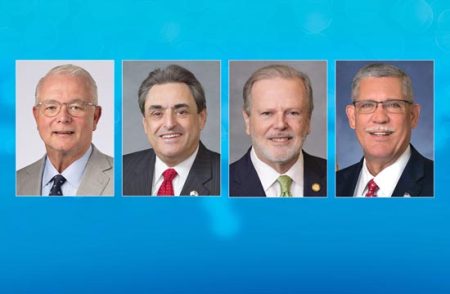
Photo: Urban News
By Nelda Holder –
The North Carolina General Assembly has approved a temporary spending bill to keep state government operational until August 14.
The bill (SB 534) was passed on Tuesday, June 30, 2015, before the new fiscal year began on Wednesday, July 1. And with that accomplishment, a joint resolution was filed to adjourn the Legislature on Thursday, July 2, for a holiday break, reconvening July 13.
The bill basically authorizes the director of the budget to continue funding recurring expenditures at the level in effect on June 30, while requiring some agencies to make staff cuts that are included in both the Senate and House versions of the 2015 Appropriations Act. It also includes a promised $35,000 minimum starting salary for teachers.
When the Appropriations Act does pass, it will be after the two chambers resolve such differences as these (compiled by the NC Justice Center):
House: Reduce state revenue by $652 million (over two years), including corporate income tax cuts and tax breaks for selected industries
Senate: Reduce revenue by $950 million revenue, further lowering corporate and personal income tax rates but expanding sales tax
House: Cut NC Pre-K program by $1.4 million (funding 6,476 fewer slots than in FY09)
Senate: Cut NC Pre-K program by $4.1 million (funding 6,976 fewer slots than in FY09)
House: Keep class sizes and Teacher Assistant numbers steady (7,000 fewer than FY09)
Senate: Cut nearly 8,600 Teacher Assistants but lower K-3 class sizes
House & Senate: Raise Community College tuition by $4 per credit hour (81% hike since FY09)
House: Boost beginner teacher pay to $35,000 from $33,000; 2% pay raise to all teachers
Senate: Boost beginner teacher pay to $35,000 from $33,000; no raise for veterans at cap
House: Restore nearly $1 million previously cut to home and community care programs
Senate: No restoration
House: No Medicaid expansion; $5 million for reform
Senate: No Medicaid expansion; $10 million for reform from a fee-for-service system to managed care by August 2017
House: Raise foster care age to 19; funds caseload growth; funds transitional living services program
Senate: Raise foster care age to 21; fund caseload growth; no funding for transition
House: Fund new psychiatric beds (more than Senate); establish new behavioral health urgent care centers (same as Senate)
House: Establish eight mental health behavior-treatment units in prisons (not in Senate budget)
House & Senate: No funding for drug treatment courts
Voting rights update
The Legislature passed important election modifications on June 22 as part of what was originally a “regulatory relief” bill (HB 836) aimed at cities to allow them to reserve certain easements when permanently closing streets and alleys – plus a few other tweaks in city regulation. The only mention of elections in the original bill was the allowance of electronic submission of absentee ballot lists by county boards of elections.
By June 22 the bill contained a number of voting law changes, including an option to file a provisional ballot or to file a written request for an absentee ballot at a one-stop voting location when the voter does not have an eligible form of photo ID. It also includes provision for voters without photo ID who “suffer from a reasonable impediment” preventing them from obtaining such, to complete a “reasonable impediment declaration” in order to vote.
The timing of the change is important due to a lawsuit in state court challenging the original voter ID provision that requires a state-issued ID, passed in 2013 but taking effect in 2016 (in time for the presidential primaries). The suit was filed by a coalition of individual voters along with the League of Women Voters of NC and the A. Phillip Randolph Institute. The effect of the new provisions is being assessed before proceeding with the suit. The two sides have until July 2 to file status reports.
Meanwhile, the federal suit involving the larger implications of changes to the NC voting laws in 2013 is still slated for hearing in U.S. District Court for the Middle District of North Carolina (Winston-Salem) on July 13. That lawsuit, targeting provisions that ended same-day registration and out-of-precinct voting, and shortened early voting by one week, is being challenged by the Southern Coalition for Social Justice, the LWV of NC, the ACLU, and the Southern Coalition for Social Justice.
Independent redistricting commission update
Last month’s legislative report featured HB 92, the proposed legislation to create a nonpartisan redistricting commission in North Carolina. Popular with some 70% of the state’s voters, the concept has been stymied despite having 75 sponsors and co-sponsors in the House. Now the U.S. Supreme Court has ruled on a challenge to the concept of such independent commissions, brought by the state of Arizona.
Arizona’s independent system was put in place through a ballot initiative (as was the California system), as a means to curb partisan gerrymandering. The state of Arizona argued that drawing district boundaries under federal redistricting was a power belonging only to the legislature. The Supreme Court, in Arizona State Legislature v. Arizona Independent Redistricting Commission, announced its decision on June 29 that Arizona’s use of a commission to adopt congressional districts was indeed legal.
The decision came on a 5-4 vote, with Justice Ruth Bader Ginsburg writing the majority’s opinion, in which she referenced “the current climate of heightened partisanship.” Joining Ginsburg in affirming the commission were Justices Stephen G. Breyer, Elana Kagan, Anthony M. Kennedy, and Sonia Sotomayor. The dissenting opinion, written by Chief Justice John G. Roberts, Jr., was supported by Justices Samuel A. Alito, Jr., Antonin Scalia, and Clarence Thomas.
It remains to be seen if this Supreme Court affirmation will kick-start HB 92 in Raleigh. This state’s proposal would assign responsibility for drawing district boundaries to the Legislative Services Office, with final approval (or disapproval) voted by the General Assembly under a procedure allowing only “corrective” amendments.
Read Nelda Holder’s blog, www.politicallypurplenc.com