City Council, Mayor Invite Citizen Input
BY CATHY HOLT, FEATURE WRITER
 |
| Mayor Terry Bellamy and City of Asheville Department Heads PHOTO BY DOUG GRANT |
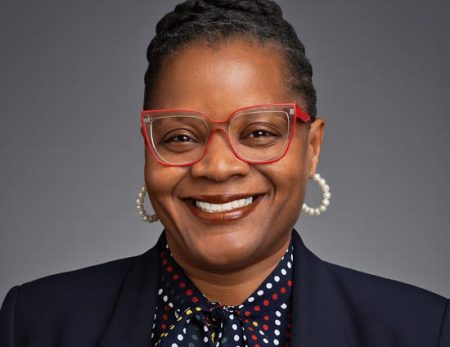
The mayor, who is the first African-American to hold that job and, at
33, possibly Asheville\’s youngest mayor ever, affirmed that one of her
most important aims is to reach across ethnic, cultural, and
generational boundaries to serve all the citizens of Asheville. To open
the meeting, Assistant City Manager Jeff Richardson spoke about the
city\’s Strategic Plan, which contains 25 multi-year goals. Gary
Jackson, the recently hired City Manager, said, “We\’re here to listen.
Based on your input, we will publish a report of goals for Asheville.”
After this brief introduction, the over- flow crowd was assigned into
eight focus groups. Each group of between 15 and 20 people was assigned
a City staff member to listen and participate in its discussions.
Brenda Mills, the director of the Minority Business Program\’s Office of
Economic Development, the City\’s representative in the group I joined,
proposed the fundamental question of the day, and one to which
participants responded enthusiastically with their ideas. Her question:
“If the city could only accomplish one priority this year, what should
it be?”
 |
| Terry Bellamy, Asheville Mayor PHOTO BY CATHRYN SHAFFER |
The answers covered a wide range of needs that residents believed need
to be addressed. Many participants focused on shortcomings in
Asheville\’s infrastructure and operations, especially the need to
control development. Proposals included stopping Wal-Mart from building
additional mega-stores and pursuing locally owned business development
and environmentally friendly small businesses. Some speakers asked
Council to build more affordable housing, upgrade the current housing
stock, improve energy conservation in municipal buildings, bring
greater equity to allocation of resources among communities, and ensure
that a comprehensive Environmental Impact Statement is included in the
comprehensive plan for the development of Asheville.
That strong thread of interest in the environment overlapped into a
number of transportation issues, since both public and private
transportation choices often impact local and regional air quality.
Besides the generic desire for “cleaner air,” a number of proposals
included specific recommendations that City Council should: limit the
number of cars downtown, implement traffic calming measures on a
broader scale, improve public transportation with more buses, buy or
retrofit buses that use biodiesel fuel, build more bike paths and
sidewalks, and work on other, less specific pedestrian-friendly
measures.
Another set of recommendations addressed a variety of quality of life
issues such as ensuring a living wage for workers and implementing a
ten-year plan to end homelessness. Others wanted a focus on problems
and needs that are, in many case, interrelated, such as better
enforcement of drug abuse laws, improved police-community relations,
increasing constructive opportunities for youth and teens, and more
public libraries.
The topics were then semi-formally grouped into similar bundles for
Council to review. Then their work will begin: choosing among the many
priorities identified by the public, and figuring out how to take
action on those they choose.