Education as Empowerment
Learning the Business Side
By Duane Adams –
Black History Month is a moment of remembrance and a call to action.
It’s a time to honor the resilience, ingenuity, and self-determination that have always defined Black communities—and helped to inform what we are building next. For me, that question often leads to education. Not just classroom learning, but the full spectrum: the knowledge passed down at kitchen tables, the lessons learned through apprenticeships and trial and error, the wisdom shared in church basements, barbershops, and community gatherings. In business, that kind of learning isn’t a luxury—it’s a lifeline.
Historically, Black entrepreneurs learned and led against the odds. When access to capital, formal education, and professional networks was restricted, people built through what was available: mutual aid, mentorship, and relentless creativity. They organized, learned from one another, and turned lived experience into enterprise. That legacy continues today. Every time a business owner chooses to strengthen their skills—financially, operationally, or strategically—they’re honoring that tradition. They’re saying: our ideas deserve staying power.
If you’ve spent any time around local entrepreneurs, you know the passion is there. The skill is there. The creativity is there. The curiosity is there. The challenge, more often than not, is on the “business side.” Too many great ideas stall because the owner lacks confidence, doesn’t have a strong grasp of business fundamentals, or becomes more focused on projecting success than confronting reality. None of this is about worthiness. It’s about getting out of our heads, focusing on what’s in front of us, and being transparent about what’s really happening.
I understand the pride that exists in our community. I see it every day. When someone walks into my office, a few thoughtful questions usually reveal what’s really holding their business back. Sometimes that honesty is uncomfortable. Not everyone is ready for it—and that’s okay. My role isn’t to convince people they need help; it’s to support those who are ready to do the work. The most productive relationships are mutual. When a client is willing to be honest with themselves, to learn, and to grow, that’s where real progress happens.
Here’s the truth. We’re not in high school anymore. I wish more founders heard this on day one: business education is cool. It should be fun. It’s stress relief. It’s a confidence builder. It’s the difference between guessing and choosing. It provides a competitive advantage. It gives you the freedom to stop asking and start earning. It also gives you the confidence to lift your head, look someone in the eye, and say, “I don’t have the answer,” or, “I need help.” Just as importantly, it gives you the ability to substantiate a disagreement with an informed, diplomatic, and rational response.
I’ve watched the myth persist that “real entrepreneurs just figure it out,” or that you’re supposed to know everything before you start.
That’s not how growth works. You don’t have to be a math person to understand your numbers. You don’t have to be a marketer to get clear about your message. You don’t have to fit a stereotype to be successful. You just need the willingness to learn, ask questions, and apply what you learn to the realities of your business.
So what does “learning the business side” look like in practice?
- Understanding your numbers so you can price confidently, predict cash flow, and avoid surprises
- Clarifying your message so the right customers can find you—and know why you’re different
- Planning in bite-sized steps so growth feels manageable, not overwhelming
- Practicing discipline—protecting your time, following through on commitments, documenting processes, and saying “no” to distractions that don’t align with your plan.
- Choosing the right structure and staying compliant without breaking the bank
- Building routines—from bookkeeping to customer follow-up—that reduce stress and increase stability
The best part? None of this requires you to go it alone. Community-based business education matters because it’s built on trust, relevance, and respect for lived experience. In spaces where people speak plainly, listen deeply, and meet you where you are, learning becomes a partnership—not a performance. You bring your expertise, your culture, and your vision. Education provides the tools to align those strengths with sustainable operations.
At the A-B Tech Small Business Center, we see our role as walking alongside entrepreneurs. Sometimes that looks like a workshop or a webinar. Sometimes it’s one-on-one coaching where we untangle a spreadsheet, talk through a marketing plan, or simply name what’s working. None of it is about presenting a single “right way.” It’s about helping you design your way—aligned with your values, your capacity, and your goals.
Black History Month reminds us that education isn’t simply personal enrichment; it’s a community investment. When one business strengthens its financial foundation, it stabilizes a household. When that business hires a neighbor, sponsors a youth team, or collaborates with another local entrepreneur, it circulates opportunity. Over time, that’s how we build generational stability—not only through ownership, but through knowledge that lasts. Learning turns a moment of inspiration into a model that can be passed forward.
If you’re reading this and feeling behind, start small. Pick one area to focus on this month—pricing, bookkeeping, branding, or operations. Ask yourself, “What would make my next decision easier?” Then seek out a resource. That could be a class, a mentor, a community center, or a peer group that helps you answer it. There’s no badge for doing everything alone. In fact, the strongest leaders I know are the most willing to keep learning.
We honor our ancestors not only by remembering their names, but by continuing their work: building with intention, sharing what we know, and preparing the next generation to go further than we did. Education—formal and informal—has always been the throughline. For today’s entrepreneurs, learning the business side is an act of self-respect. It’s a way of saying, “My idea deserves structure. My customers deserve consistency. My community deserves a business that lasts.”
Entrepreneurship is a journey, not a test. You don’t have to have all the answers to get started. You just have to take the next step—and you don’t have to take it by yourself.
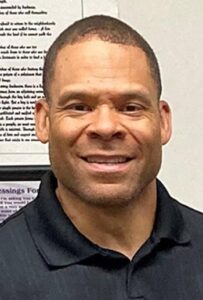
Duane Adams is Associate Director of the A-B Tech Small Business Center. Learn more by visiting www.abtech.edu/sbc.