Don’t Swim with the Sharks!

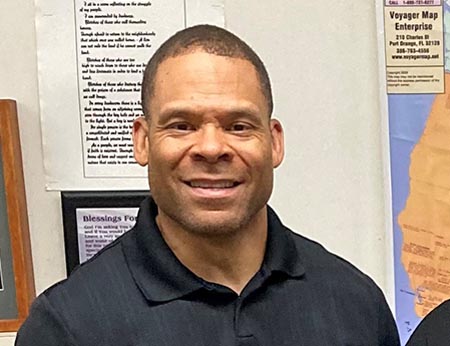
By Maceo Keeling –
It seems that I’m always looking for ways to make ends meet.
We’re all constantly juggling our funds to make certain that our essential needs are taken care of: rent, utilities, groceries, and gas in the car.
Making ends meet is the outcome of our work, which meets the demand that supplies our livelihood. Part of the process requires a few tools: a credit or debit card, a bank account, and of course some money.
Generally, money, a card, and a bank have something in common: the banking institution itself. There are good institutions like credit unions that generally have lower interest rates for money you borrow and slightly better interest payments for money you deposit. These institutions are heavily regulated to protect you, at least to a certain degree. They are members of the Federal Deposit Insurance Corporation (FDIC) and/or the National Credit Union Administration (NCUA), the government agencies that protect and insure your bank and credit union deposits. You still have the responsibility to be vigilant with your deposits and payments. The people I know who have a little money—papah, moollah, dinero, dough, chedder, skrilla, or pesos—usually check their account every day.
There are also non-bank institutions—and they can do far more harm than good to your finances. They often are not members of the FDIC, and when they go out of business, your money goes with them. In these “nonbanks” we are more likely to fall victim to the high-rate (predatory) side of the lending industry, like payday, account-advance, tax refund-advance and structured, settlement-advance loans, to name a few.
Typically we are not customers, but TARGETS, and they are all over our community aiming at us. They are “loan shark type” businesses preying on poor and working-class people. We’re often ready-made targets: we don’t or won’t use regular banks because we don’t have the money to maintain a bank account, or we lack knowledge of how the banking system works.
Folks who use non-bank businesses are often referred to as under-banked or unbanked. The FDIC says that there are 17 million un-banked, and 51 million under-banked Americans, trying to make end meet. We are not alone…
There are real outside pressures, and schemes, and scams that make the poor get poorer. But we have a say in the matter.
Whatever happened to the good old piggy bank? Put your coin in it daily until you have enough for the minimum deposit required for a legitimate bank or credit union account. It doesn’t have to be a huge amount: a hundred dollars, sometimes less, can get you started. You probably have it in your “change jar” already—it’s your, “don’t go money” anyway.
If you open a legitimate bank or credit union account, it will come with a debit card, and you’re in business. In future columns I will bring you more information about how to get banked … and how to avoid fees and charges in the shark-infested waters of the non-banked ocean.
You don’t have to be great to get started but you do have to start to become great!
Answer the call!
The Conscious Call radio program airs every Monday at 11:30 a.m. on WRES-FM 100.7. In a collaboration with the radio program, the Urban News will help keep readers informed about events, programs, news, and the progress of The Conscious Call. The opinions and statements made in this column are solely the opinions of the author and not necessarily those of the Urban News.