Book Bag: March, 2010
 Reviews by Sharon Shervington
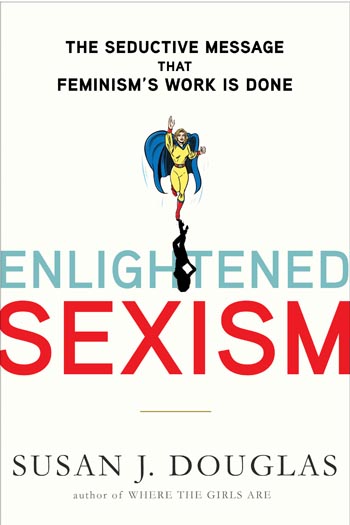
Enlightened Sexism: The Seductive Message that Feminism’s Work is Done
The intriguing oxymoron Enlightened Sexism is the title of the latest work from the cultural critic who gave us the insightful The Mommy Myth. Enlightened sexism is defined as “a response, deliberate or not, to the perceived threat of a new gender regime.”
She chronicles in great detail the media’s depiction of women and girls, describing the repulsive devolution of these images over the last two decades, especially in television and magazines. Among the worst components she cites are “renewed and amplified objectification of women’s bodies and faces,” and “duel exploitation and punishment of female sexuality.”
Enlightened Sexism, written by Susan J. Douglas; Times Books; 354 pages.
 How to Save Your Own Life: 15 Lessons on Finding Hope in Unexpected Places
This charming self-help quick read is by the son of Brendan Gill,
of New Yorker fame, who led a charmed life until it all fell apart when
he was in his early fifties, fired after 25 years at a top ad agency.
After a string of catastrophes, involving both his health and marriage,
Mr. Gill wakes up to an array of simple truths, such as “Look with
Respect at each Individual You See.” He’s like the wise fairy godfather
we all wish we had.
How to Save Your Own Life, written by Michael Gates Gill; Gotham Books; 207 pages.
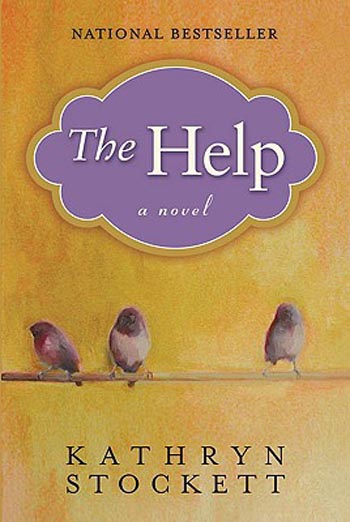 The Help
This story of a young white woman struggling to be a writer in
Jackson, Mississippi in the early 1960s, and the maids whose stories
she gets a book contract to tell, hit the New York Times bestseller
list many months ago. It has struck such a chord that a few weeks ago
it edged into the number one spot, and there it remains.
Though the maids have a wonderful chance to tell their stories,
and Skeeter gets a job in publishing in New York City, ultimately the
book is tragic because there is no way out for the maids who have
essentially been this young writer’s ticket to the big time.
While the characters are compelling at times (I especially liked
Celia, whom all the husbands want and the white wives hate), the heavy
dialect in which the black characters spoke was troubling, since there
is no effort to reflect what are surely the heavy Southern accents of
the employers.
The Help, written by Kathryn Stockett; Amy Einhorn Books, Putnam; 451 pages.