Ferguson, MO: a Window Into the Past
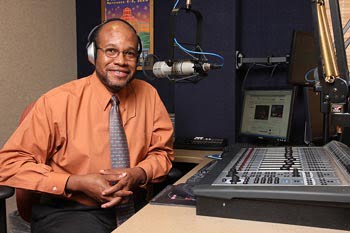
by Errington C. Thompson, MD
Sometimes I think I’m in the movie Back to the Future, able to hop in my DeLorean and go time-traveling. Let’s start in the present.
August 9, 2014, Ferguson, Missouri. A young unarmed black man, Michael Brown, is walking in the street. He is confronted by a police officer. At the end of that confrontation, Mr. Brown is dead. Officer Darren Wilson shot him six times.
Two incidents, one problem
Backtrack to February 26, 2012. Trayvon Martin is walking back from a corner store. He is armed with an iced tea, a hoodie, and some Skittles™. He is shot and killed by a neighbor who was once a member of the neighborhood watch brigade. Here’s a young black man walking home from the store, talking on his cell phone, and somehow he ends up shot to death.
These two cases are similar. An unarmed black youth encounters a stranger with a gun, a man of authority—in one case a police officer, in the other a “wannabe cop” who imagined himself somehow associated with law enforcement. In both cases, the young black man, a teenager, ends up dead.
Back to the future
Watching television coverage in the days after Michael Brown’s shooting, I felt like I had been whisked back to 1955. Because what came next was truly frightening. It was like a flashback to some of the riots that happened in the 1950s, ’60s and ’70s: Little Rock, Montgomery, Birmingham, Detroit, the Edmond Pettus Bridge, the University of Mississippi…
We saw the police department of Ferguson make every mistake possible. They rolled in the heavy armor. They rolled in combat tanks. They fired tear gas at the crowd. Tanks, armored soldiers, and tear gas—just like we saw used in Beirut, Beijing, Baghdad, and Damascus. But this was Ferguson, Missouri.
Lessons learned …
Foolishly, I thought that we were all smarter than this about crowd control and civic protests. From a crowd-control standpoint, I thought we had learned from Martin Luther King that civil non-violence actually worked. Showing restraint while Bull Connor attacked peaceful, unarmed Americans with dogs and fire hoses helped win the day.
And from a policing standpoint, I’m truly flabbergasted. We have a wealth of information, from the Watts riots in the 1960s to the Miami riots in the 1980s to the L.A. riots of 1992, about what not to do. In Miami, when Arthur McDuffie was shot by the police, all four police officers were acquitted, setting off several days of violent riots. The L.A. riots occurred in 1992 after the police officers were acquitted of the beating of Rodney King—a beating that was caught on videotape.
…and unlearned
I really thought we had learned. So, apparently, did others. The April 29, 2014 edition of Newsweek reported, “Studies show that police have the power to lessen the tensions of an angry group of people or to goad them into a riot… When police treat the crowd justly and humanely, the chances of an uproar decrease and participants trust law enforcement more.”
In other words, it was the police reaction, not rabble-rousers or “outside agitators” or local marchers, that pushed the angry people of Ferguson into violence.
Step by step by mis-step
The interaction between Officer Darren Wilson and Michael Brown is not unique. It’s not new in how it started, or how it escalated, or how it ended. We all know the basics of what happened.
Officer Wilson ordered Michael Brown to walk on the sidewalk instead of in the street. Assuming Mr. Brown was not blocking traffic—by all reports, there was none—this was a petty, trivial offense. Once Michael Brown was told to move off of the street and on the sidewalk, the ball was in his court: at that point, he had the ability to change the outcome of the situation.
Now, when I was growing up, I was taught always to show police officers respect. Why? Because the consequences of not showing them respect were high, especially for a black youth in Texas—jail or death. Whether or not Mr. Brown had been taught that lesson, it’s possible, even likely, that he said something like, “Don’t you have better things to do with your time?”
At that point, the ball was an Officer Wilson’s court. He had the ability, and should have had the training, to de-escalate the situation. Instead, their deadly game of ping-pong went back and forth as frustration grew and tempers flared.
Thinking – fast, slow, and not at all
Just for a second, let’s jump back to New York in 1999. Four undercover plain-clothes police officers are touring one of the hotspots. It’s after midnight. One of the officers spots Amadou Diallo, an immigrant from Guinea. The officers get out of the car. Two of them approach Diallo, and one tries to detain him. Diallo, the immigrant who speaks poor English, instead runs to the door of his apartment complex—his home, his castle—where he pulls out his wallet. The police officer shouts, “Show me your hands.” Next, because of poor lighting and even poorer understanding, another yells, “Gun! He’s got a gun!” Amadou Diallo dies in a hail of gunfire with his wallet in his right hand.
As human beings, we have been gifted with three separate ways to figure out a problem. As Daniel Kahneman outlined in his great book, Thinking, Fast and Slow, one portion of our brain enables us to come up with answers to problems extremely quickly. A different part works more slowly and methodically. And finally, there is a part of our brain that was discussed in Rebecca Costa’s book, Watchmen’s Rattle, which produces insight.
Insight is that “Eureka!” moment. Unfortunately, you cannot depend on insight and you do not know when it’s going to come, or if it’s going to come. It’s wonderful when it does, but it’s unreliable and unpredictable.
The fast part of our brain—the primitive part, the amygdala—is associated with a fight-or-flight response. It’s precisely the portion of our brain that we do not want to use when we are facing a complex problem. This is the part of our brain that gives us a knee-jerk, primal, guttural, emotional, and testosterone-filled reaction. When our hearts began to race, our vision doesn’t improve, in fact it actually gets worse. Our hearing diminishes as epinephrine races through our veins. If you want to beat someone to death or shoot them 41 times, this is the part of the brain you use.
But we want police officers to make thoughtful, smart decisions: we want them to use the slow, rational part of our brain. That part—the cerebral cortex—has developed over the last several hundred thousand years. It’s methodical, analytical, and … slow. If we have time, it will give us the right answer to most questions, but it doesn’t work so well when we need a split-second decision. That’s what the fast part will do—whether the answer is right or wrong, it will give it to us quickly.
So, how do police officers make split-second decisions using the rational part of their brains in the middle of the night? First of all, you train police officers to think: to use their brains to assess the situation. Just the decision to assess the situation—that mental stop sign we can hold up that says “Wait one second”—suppresses the amygdala and enhances the cerebral cortex.
The rational brain
That shift, from primitive to rational analysis, begins the thinking process. And we ask, is this really a threatening situation? In the Amadou Diallo case, were the officers being threatened? No. Therefore, Retreat. Call for backup. Was Rodney King a danger to the LAPD? Hardly. Wait. Calm yourself, and calm him down. Was Trayvon Martin a threat to George Zimmerman? Only if you believe a 170-pound boy talking on a cell phone was a threat to a 230-pound man with a gun—who had already been instructed by the police not to follow Trayvon but to return to his apartment. Stop. Go home. Call 911.
The best thing about the tactic of thinking before acting is that it lets the rational part of your brain begin to work. It also allows your heart rate to begin to decrease. Adrenaline levels begin to fall. The fight-or-flight response is suppressed. The respiratory rate slows, and the rational part of our brain begins to leads us to the right solution.
A police officer who ran one of these “de-escalation” programs in Miami was quoted as saying, “You don’t want to put yourself in a position where the only way you have to defend yourself is to shoot someone.” Isn’t that the bottom line? We have had enough of police officers shooting unarmed men. There have been far too many incidents, most of them preventable. It has to stop.