Textbook Cases
 by Sharon Shervington
With the transformation of information media—one might even call it a descent—it is more important than ever that that those interested in the forward movement of the culture, particularly regarding social justice, know where to turn for trustworthy and thoroughly sourced material on the social sciences and beyond. This is the first of an occasional series, then, on textbooks that are readily accessible to the general public.
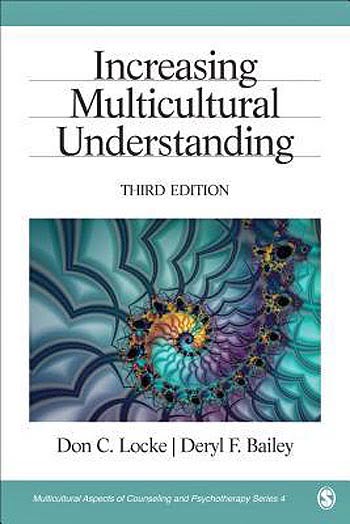
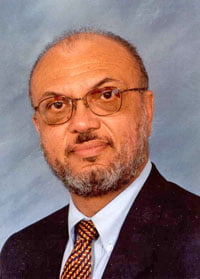
A fitting first entry is Increasing Multicultural Understanding, by Don C. Locke and Deryl F. Bailey. Dr. Locke, a pioneer in the field, who lives here in Asheville, has been a prominent voice in counseling, diversity, and cultural competence for over three decades. That is an enormous achievement, especially because it is just in the last two decades that the latter two subjects have begun to get the in-depth scholarship and professional attention that they deserve.
This slim yet weighty book goes beyond what is to be found in other similar texts mixing together the latest research studies and scholarship in this evolving field in a well-organized format. Instead of lumping Asian cultures together, for example, there are separate chapters on Japanese-Americans, Chinese-Americans, Korean-Americans, and Vietnamese in the United States; the same is true in terms of the handling of Latin cultures.
Each section contains information on how the group has acculturated, on poverty and economic concerns, racism and prejudice, and cultural values and attitudes. There are also sections in each chapter that cover child-rearing practices, family structure and dynamics, and history of oppression.
The introduction explains what is necessary for teachers and counselors to be effective in serving culturally diverse populations; it also discusses links between individual markers of identity and those that are tied to membership in a particular racial or ethnic group, as well as the piece of identity that mirrors an individual’s place in the world community. Each chapter also includes questions for review and reflection and a case study.
Particularly insightful is Chapter 12: “Social Justice in Education and Counseling.” It tackles such existential questions as: Is life fair? What rights are people entitled to? These are questions to which too many are given easy answers, which may ultimately result in deep alienation and a sense of being mistreated.
The authors discuss “Social Justice as a Basic Human Need,” and cite a 2012 study (Picower) that identified six elements of social justice education. Traditionally, some groups have avoided counseling, at least in part because counselors may not have been well informed regarding cultural diversity and social justice.
While it can’t be said that those days are completely behind us, Increasing Multicultural Understanding provides ample evidence of forward movement, thus increasing the likelihood of best outcomes for all.