College Students – Think Globally!
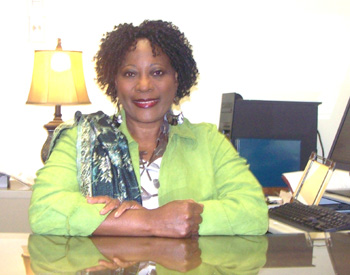 |
| Starlett Russell Craig, coordinator of Global Initiatives at the Charles H. Houston Center for the Study of the Black Experience in Education. |
By Starlett R. Craig
Several years have passed since I first made an impassioned plea to African American college students to set their sights on global travel after graduation.
I passionately championed this experience after observing that students who participated in Study Abroad were gaining a competitive edge in the workforce and a truly global perspective, both of which are highly valued in the job market today. Having immersed themselves in another country and culture, and often having pursued a second language as well, they were acquiring what we now define as “global competence.”
World events have a major impact on not just our everyday lives, but on the institutions that govern our lives, as well as the places where we live and work. Exploring the entirety of the world we live in is probably the best way to acquire firsthand knowledge about contemporary social, political, and economic events that will shape America’s future. We must ask ourselves: What are the trends in the global economy? How is the United States addressing global warming in contrast to other nations? What do we know about global poverty, or even global health?
It is interesting to recognize how many of these phrases have now
seeped into the language of nightly news broadcasts. But what does it
mean to the typical college student? In a word, it means that today’s
headline will shape your future no matter where you live.
As a Study Abroad advocate with extensive experience in the field of
international education, I recognized long ago that the rapid growth of
technology in our interconnected world would require that African
American students graduate with both a laptop and a passport in hand in
order to be competitive. I wanted students who were underrepresented in
education abroad to be aware of the opportunities, and I sought to use
my own voice to raise awareness and do needed outreach.
Today, those earlier predictions have come to pass. During the early
part of this decade, it became a universal mandate at my university for
entering freshman to purchase a laptop computer. On Sept. 11, 2001, we
witnessed a world event that impacted our national security and further
prompted the growth of study abroad programs in nontraditional
destinations and the pursuit of critical foreign languages. A student
willing to learn Arabic, Chinese, Farsi, Japanese, Korean, Russian, or
Urdu, for example, can receive extensive scholarship support to study
abroad. Our own United States Department of Defense is one of the main
purveyors of this scholastic support.
In 2004, President Bush and the U.S. Congress jointly appointed the
Commission on the Abraham Lincoln Study Abroad Fellowship Program. This
17-member bipartisan committee issued a full report of its findings in
November 2005, thereby paving the way for 2006 to be nationally
recognized as the Year of Study Abroad.
While the numbers of U.S. students studying abroad has increased,
African American students represent only 3.5% of the total. Given the
development on the world stage within the last decade, I could write a
new list of top ten reasons to study abroad. But, I prefer instead to
enumerate a few reasons as to why our government feels it imperative to
make it possible for one million American students to study abroad
annually by the year 2017.
Let me highlight a few of the facts from the Abraham Lincoln Commission’s final report:
• Living in a foreign country helps students better understand other cultures as well as their own
• Study abroad improves foreign language skills
• Study abroad accelerates skill building and strengthens strategic relationships
• Study abroad opens the door to new career options. Recent federal
reports cite a shortage of language and cultural skills in more than 70
agencies critical to national security, public diplomacy, and economic
competitiveness.
It is important to prepare our undergraduates to live and work in a
global society, and study abroad is one of the ways in which this can
be accomplished.
Anyone desiring to know the facts can take note of the aforementioned
points and understand why it is important to populate your own list of
things to do and places to see before you graduate. Seeing the world
and earning college credit has never been easier.
For more information on scholarships and resources to help you plan a
Study Abroad experience, I recommend seeking out the resources on your
college campus and visiting the following website to find on-line
mentors: www.AllAbroadus.com.