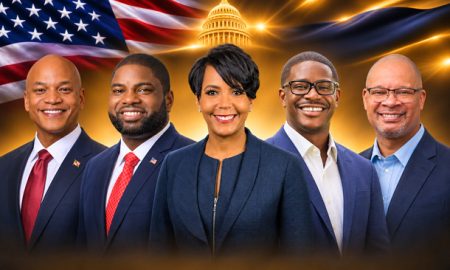
Black Scientists Are Shaping the Future
From the periodic table to artificial intelligence, Black excellence continues to drive discovery.
When most of us think about scientific breakthroughs, we imagine famous inventors, astronauts, or Nobel Prize winners.
What we rarely see are the thousands of researchers whose work quietly changes the world. Yet every day, Black scientists are helping expand human knowledge, improve health care, advance technology, and inspire the next generation.
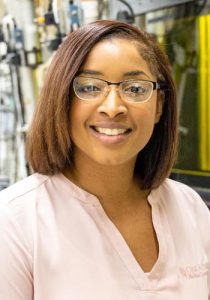
One of those scientists is Clarice Phelps, a nuclear chemist whose work helped make history on the periodic table. Working at Oak Ridge National Laboratory, Phelps was part of the team that purified berkelium-249, a rare radioactive isotope used in experiments that confirmed the existence of element 117, later named tennessine. The achievement earned her recognition as the first African American woman known to have contributed to the discovery of a chemical element.
Her journey did not follow a traditional path. After earning a chemistry degree from Tennessee State University, an HBCU in Nashville, Phelps joined the US Navy’s Nuclear Power Program, serving aboard the aircraft carrier USS Ronald Reagan before building a career in nuclear science. Today, she is recognized not only for her research but also for her efforts to encourage more young people, especially young women of color, to pursue careers in science.
Phelps’ story reminds us that groundbreaking discoveries are often the result of teamwork. The legacy she represents is alive and growing.
Scientific progress depends on researchers, technicians, engineers, and specialists whose names may never become household words. Their contributions are no less important.
This year, two students at North Carolina A&T State University, Victoria Little and Avery Love, were named 2026 Astronaut Scholars, one of the nation’s most prestigious awards for undergraduate STEM students.
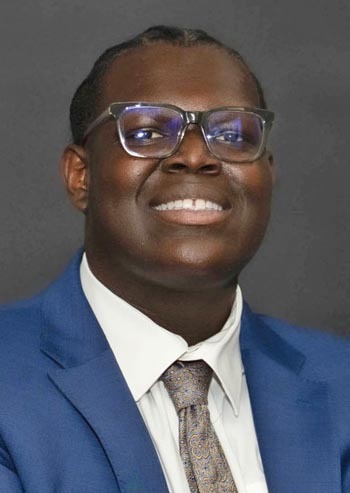
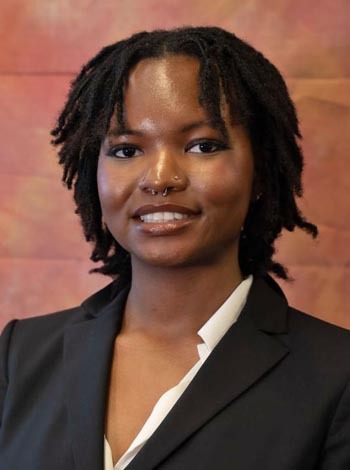
Their research spans subjects ranging from neurobiology and cancer studies to Alzheimer’s disease and brain metabolism. Their achievement highlights the continuing role of HBCUs in producing scientists, researchers, and innovators who are helping shape the future.
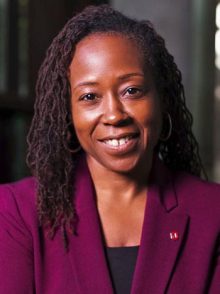
In Atlanta, roboticist and artificial intelligence expert Ayanna Howard, president of Spelman College, was recognized as an EBONY Power 100 STEM Trailblazer. Howard has spent her career advancing the fields of robotics and AI while opening doors for young Black women in technology. As artificial intelligence transforms industries around the world, Black women are helping lead the conversation about how that technology should be developed and used.
Innovation extends beyond laboratories and universities. Ruthie Lyle, a patent architect at NVIDIA, was recently named the 2026 Intellectual Property Champion. With hundreds of patents to her name, Lyle is among the most prolific Black inventors working today. Her career demonstrates that scientific achievement is not only about discovery but also about turning ideas into technologies that improve everyday life.
These accomplishments share a common thread. They challenge outdated assumptions about who belongs in science and who gets to shape the future. For generations, talented Black scientists made important contributions while receiving little public recognition. Today, their work is becoming more visible, but many remarkable stories still go untold.
That is why stories like these matter. Most Americans can recite the names of a few famous inventors or astronauts. Few can name even one Black scientist. Yet, we know that Black excellence can be found in every field, including the most advanced frontiers of scientific research.
As new discoveries emerge and new technologies reshape our world, Black scientists will continue to be among those leading the way. Their names may not always make headlines, but their work is helping build the future all around us.