Amendments’ Effect Will Be Profound
Voters approved changes that could affect generations to come.

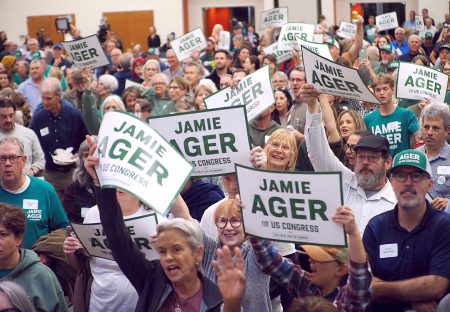
Photo: Tim Barnwell
Legislative News by Nelda Holder –
In the midst of all the election hoopla in our state—big changes in representatives, perspective, and presumably follow-through from that—the North Carolina Association of Educators has issued a dark warning regarding the two constitutional amendments that were passed by the voting public.
Those amendments seemed almost to appear out of thin air. It has been obvious for a long time that what North Carolina public schools need is more funding to operate at a higher level on behalf of our students. What recent legislative priorities have produced is giveaways of “educational” money—the public’s money—for private vouchers allowing certain students a pass to private schools that then benefited from our tax dollars going to private pockets.
According to Public Schools First NC, in 2025-26, “more than $600 million is allocated for OS vouchers.” Originally intended to support low-income households, the voucher program removed limits in 2023, and tax-funded vouchers are available to even wealthy families at this point. A program intended for low-income households grew from its 2014-15 beginning to $1,183,740,000 in 2024-25 (over 10 years) and is now targeted to reach $8,753,740,000 in another 10 years (2034-35).
Let me quote the NCAE on the issue (from a press release in May after those amendments passed in the Legislature): “Instead of addressing pocketbook issues and funding our schools, Republican lawmakers pass a slate of ballot measures that sound like a win for working families but are designed to do one thing: lock in tax breaks for billionaires and corporations permanently…. These amendments are a love letter to the billionaires and corporations that have funded their political power.”
And now. What do these recently passed state constitutional amendments do? One will cap state income tax rates at 3.5%—something that applies to corporations as well as individuals. The second limits increases in local property taxes, which means potentially limiting a community’s ability to fund infrastructure needs as well as educational and other needs. This potentially ties the hands of local communities to meet their own needs even when they want to.
NCAE’s own interpretation at the time last May when the General Assembly passed the amendments noted that “the Republican-led General Assembly is ten months late on passing a state budget. Our schools are underfunded. Families across this state are struggling with rising Duke Energy bills, Aetna Healthcare premiums, food and gas prices.”
Permanently. Because that is what a Constitutional Amendment means.
These amendments honestly seemed to appear out of thin air, but they are going to affect the very heart of our communities and their public needs. Or, as the director of the North Carolina Budget & Tax Center, Alexandra Sirota, observed on the day after the affirmative statewide vote on the amendments, “The passage of the tax amendments are deeply disappointing for everyone who believes North Carolinians deserve a real voice in shaping the future of our state. The challenges facing our communities haven’t gone away. Our schools still need teachers, families still need affordable child care and health care, and communities still need the resources to respond to emergencies and build for the future.”
Nelda Holder is the author of The Thirteenth Juror – Ferguson: A Personal Look at the Grand Jury Transcripts.