When Will Equality Arrive?
Public goods change shape when Black Americans finally gain full access to them.
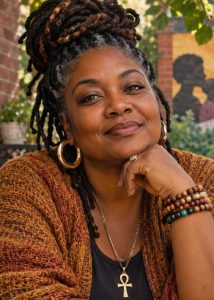
By Ebony Emerson –
I have been thinking about the way American systems behave when Black people walk through the door.
It happens quietly, almost predictably. A public good is created, funded, and celebrated. It grows strong enough to feel permanent. Then Black Americans gain access, and the system begins to change. Not because equality is impossible, but because policymakers decide they no longer want to pay for it.
You can see this pattern in education. For much of the twentieth century, public colleges were affordable enough to feel within reach for many white families. Some institutions were even free. But these benefits were never universal. They were shaped by segregation, by admissions practices that favored white students, and by federal programs like the GI Bill that were administered in ways that shut Black veterans out.
When Black enrollment began to rise in the late 1960s and early 1970s, states faced a choice. They could expand funding to match the new reality, or they could shift the cost onto students. Many chose the second path. CUNY’s move from free tuition to paid tuition in 1976 is one example. The timing is documented. The motivations are debated. What is clear is that the burden of cost grew at the same moment access widened.
Health care tells a similar story. The United States never had universal health care, but it did have systems that functioned like public goods for white Americans. Employer‑based insurance expanded during the 1940s, and hospitals received federal support through programs that were supposed to serve entire communities. In practice, Black workers were excluded from the jobs that offered insurance, and Black patients were turned away from hospitals that accepted federal funds.
When civil‑rights legislation forced hospitals to desegregate, policymakers again faced a choice. They could build a system that treated everyone with dignity, or they could resist the cost of equality. Universal health care proposals were blocked in part because they would have required equal access for Black Americans. That history is documented. It shows how fear of shared benefits can shape national policy.
Credit is another example. The modern credit system was not created because Black people began buying property, but it was built on a foundation that defined Black neighborhoods as risky by default. Redlining maps from the 1930s labeled Black communities as hazardous zones, and those labels shaped lending practices for generations. When civil‑rights laws made discrimination illegal, lenders adopted new tools.
Credit scores were introduced as neutral measures of risk, but they were built on data shaped by decades of exclusion. The system changed, but the outcome stayed familiar. Black borrowers continued to face higher barriers, not because of personal behavior, but because the rules were written around a history that had never been repaired.
The question that sits beneath all of this is simple. Why do policymakers resist funding equality? Part of the answer lies in power. Public goods create shared strength, and shared strength shifts the balance of who gets to shape the future. Another part lies in fear.
When a system expands to include everyone, it forces a reckoning with the stories this country tells about merit, deservingness, and who belongs at the center of public life. And some of the resistance comes from the way budgets reflect values. Funding equality requires a belief that every community deserves the same level of care. That belief has never been universal in America.
There is also a practical truth. When a system has been built around exclusion, expanding it requires repair. Repair costs money. It demands investment in communities that were denied resources for generations. Policymakers often choose to avoid that cost. Instead of strengthening the system, they shrink it. Instead of expanding access, they redefine it. Instead of building a future where everyone can thrive, they preserve the old boundaries in new forms.
The pattern is not inevitable. It is a choice. And choices can change. But naming the pattern matters. It helps us see that the shifts in education, health care, and credit are not accidents. They are responses to equality itself. They show us how deeply the country struggles with the idea of shared public goods. They remind us that progress is not only about opening the door. It is also about making sure the room stays funded once everyone is allowed inside.
NOTE: The views and opinions expressed here, as well as assertions of facts, are those of the author. They do not necessarily represent the views or opinions of The Urban News.