Beyond the Dream
In Asheville’s tough housing market, some families are still finding a path to homeownership.

Jasminu Moore still remembers the prayer.
Pregnant with her second daughter and staying wherever she could, she whispered, “Lord, please let me have somewhere to bring my new baby home to.”
Not long afterward, she was approved for an apartment through the Housing Authority of the City of Asheville (HACA). The same day she signed her lease, she went into labor.
Today, Moore lives with her two daughters in a home of their own on an acre of land in Candler. Her older daughter, 17, mentors elementary school students through a literacy program. Her 13-year-old stays busy with softball, cheerleading, and flag football. Moore has come full circle, now serving as site manager at Pisgah View Apartments, a HACA property, where she helps residents navigate many of the same challenges she once faced.

Moore’s story is increasingly rare in Asheville, where the average home value approaches $500,000 and local wages lag behind, making the path from renting to owning steeper than ever. That is where HACA hopes to make a difference.
From Stability to Opportunity
In addition to operating affordable housing communities and administering the federal Housing Choice Voucher Program, HACA offers programs designed to strengthen finances, build savings, and prepare residents for homeownership. One of those initiatives is the Family Self-Sufficiency (FSS) Program, a voluntary five-year program that pairs participants with coordinators who help them pursue goals such as earning a degree, improving credit, or securing higher-paying employment.
A key feature of the FSS program is its escrow savings account. As participants’ earnings increase, so does their rent; however, a portion of that increase is deposited into an escrow account. Participants receive those funds upon successful completion of the program.
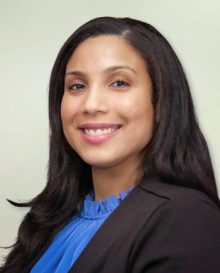
“For many participants, it is the first time they have had savings set aside,” said Ella Santos, HACA’s president and CEO. “That changes the way people think about what is possible.”
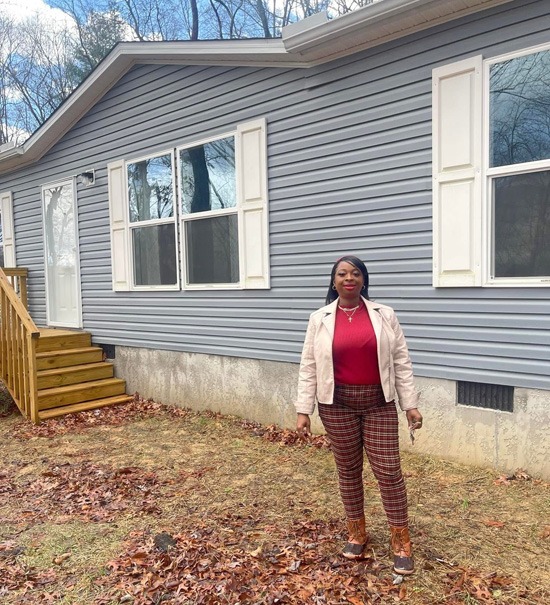
HACA’s FSS Program currently serves 248 participants, and approximately 30 graduates have achieved homeownership. One of them is Parthenia McAuley.
Rebuilding a Life
When McAuley moved into HACA’s Deaverview Apartments in 2018, homeownership was not her goal—survival was.
After she experienced homelessness while struggling with substance use disorder, public housing provided a stable foundation. Then tragedy struck: her 40-year-old son, Robert, died unexpectedly after suffering a stroke.
Rather than retreat into grief, McAuley surrounded herself with what she calls “positive things.” She became active in her church, joined Deaverview’s Resident Council, volunteered with neighborhood children, and enrolled in the FSS Program.
Along the way, she found steady employment at Goodwill, advancing from tagging donated clothing to shift manager.
This spring, those years of determination paid off. She and her husband, Lorenzo, purchased their first home—a four-bedroom house with a large back yard for their pit bull, Rocko.
“It was such a great feeling,” McAuley said.
To achieve that milestone, however, the couple relocated to Boiling Springs, South Carolina, where home prices are significantly lower.
McAuley’s story reflects a broader reality: even after years of hard work, homeownership in Asheville often remains out of reach.
“When families have access to the right support and opportunities, homeownership becomes more than a dream—it becomes a possibility.” ~ Ella Santos

Photo: Johnnie Grant/The Urban News.
The Power of Partnership
For families determined to remain in Asheville, the path to homeownership often requires more than determination—it requires access to programs, resources, and partnerships. That was the case for Nikita Lindsey.
After growing up in HACA housing, Lindsey worked through the FSS Program to improve her credit, obtain her driver’s license, and build savings. Her search for resources led her to the Asheville-Buncombe Community Land Trust, which creates permanently affordable homeownership opportunities by retaining ownership of the land beneath each home.
In 2022, Lindsey became the organization’s first homeowner, purchasing a three-bedroom home in Asheville for roughly half its appraised value.
Today, Lindsey encourages others to explore similar opportunities.
“Anything is possible if you believe in yourself, make a plan, and stick with it,” she said.
Santos emphasized that collaboration is key. “Preparing families for homeownership is essential, but preparation alone is not enough if there are no affordable homes to purchase,” she said. “That is why partnerships matter.”
A Path Forward
Santos hopes stories like those of Moore, McAuley, and Lindsey will inspire others to view homeownership as attainable, even in a challenging market.
“Every family’s journey looks different,” she said. “But when people have the determination to keep moving forward and are part of a community willing to invest in their success, extraordinary things can happen.”
That, she added, is how stronger families, stronger neighborhoods, and a stronger Asheville are built.