Restorative Justice
 |
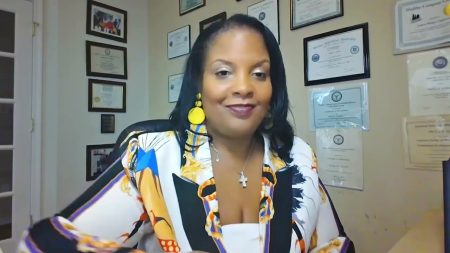
| Marty Price, Executive Director of Restorative Justice of WNC. |
The Victim-Offender Mediation Program An Alternative for Young Offenders
By Cathy Holt
“Justice is love correcting that which revolts against love.” -Martin Luther King, Jr.
Our criminal justice system is focused on punishment for offenders, and the prison system is widely recognized as causing young offenders to grow into hardened criminals. Is there a better alternative, one in greater harmony with the wise words of Dr. King?
Restorative
justice requires offenders to take meaningful responsibility for their
actions and focuses on repairing the harm to victims and the community.
Restorative justice gives offenders the opportunity to right their
wrongs and redeem themselves, in their own eyes and in the community.
This leads to win/win/win solutions where victims, offenders and the
community all benefit, providing true healing and completion.
Marty Price,
director of the Victim Offender Reconciliation Program Information
& Resource Center, is a pioneer in restorative justice. Marty has
been a mediator and trainer in victim-offender dialogues in many states
and countries, and is one of the organizers of the Restorative Justice
Task Force in WNC.
From Firebug to Firefighter
Price tells the
story of a juvenile who set a fire resulting in smoke inhalation
injuries to an elderly woman in the house. The youth was a repeat
offender, with a history of fire setting; if the Juvenile Court
counselor and the victim had not been open to a restorative justice
approach, he would have gone to jail.
“In the
mediation, the boy made many apologies, agreed to pay restitution for
some of the damage he had caused and to do community service at the
firehouse,” Price recalled. “He was taken under the wing of the
firefighters and received counseling for the fire-setting behavior.
Soon, he entered Fire Academy. A few years later, he received a heroism
award for saving someone’s life!”
The youth also
paid the mediated restitution to the victim, over several years.
According to Price, “Court-ordered restitution typically gets paid back
only 20% of the time, because it feels like a punishment from an
impersonal court system, rather than a promise and a moral obligation.
When juvenile offenders voluntarily make these agreements with the
victims, we see over 90% of the restitution paid back. But perhaps most
importantly, national research has shown that recidivism is reduced by
up to four times, as compared to offenders processed by juvenile courts
in the traditional manner.”
Racial Injustice
According to
Racial Issues In Criminal Justice: The Case Of African Americans, by
Marvin D. Free, Jr., ed., African Americans’ higher arrest rates appear
to have much more to do with police discretion than with actual
commission of crime. African Americans’ higher drug abuse arrest rates
are due to selective drug legislation and enforcement targeting the
poor and people of color — specifically, legislation and enforcement
aimed at controlling crack cocaine. Racial discrimination throughout
the processing of youths by juvenile justice officials leads to more
minority youths being transferred to adult court.
Restorative
Justice approaches including victim-offender mediation could help keep
some of our young men out of prison. With mediation and other
opportunities for rehabilitation, they could turn their lives around.
WNC Restorative Justice Task Force
The Restorative
Justice Task Force is a group of concerned citizens working with
community organizations and local governments to expand existing
programs and develop restorative approaches that support healing for
victims, offenders, their families and the community.
By participating
in an Action Team, volunteers can help bring healing to victims of
crime and their families or help offenders take responsibility for
their actions and find ways to make better decisions in the future.
They may also learn to be mediators and help victims and offenders have
a meaningful dialogue that brings healing to both.
Vigils for Crime Victims
In Durham, NC,
when a death occurs as a result of a crime, the local task force holds
a vigil at the home of the family of the victim. The vigil participants
offer support for the survivors and draw attention to the crime and the
community response to the crime. Typically, there are 7 murders per
year in Buncombe County. Next year, the WNC Task Force will begin
recruiting and training volunteers to provide this healing service in
our community.
Family Conflict Resolution
Before teenagers
get to juvenile court, there are often problems at home. Many parents
are at their wits’ end about troubled teens. The Task Force will
provide peacemaking circle training and mentorship for parents.
Schools
The Schools
Action Team will work with interested schools to implement bullying
prevention and peaceful conflict resolution programs.
Outreach to Faith Communities
The Task Force
will continue to provide speakers and support to any congregation
wishing to participate in restorative justice activities.
See Websites: www.restorativejustice.info, www.vorp.com. Contact: martyprice-at-vorp.com