Book Bag: May 2011
Contrasting connections – the transformation of an Ecuadorean girl from exploited slave to confident woman, and a cogent analysis of the singular life of Mahatma Gandhi.
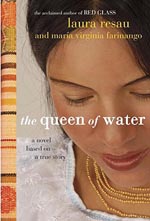
The Queen of Water
Written by Laura Resau and Maria Virginia Farinango
We all know what a wakeup call 9-11 was for us in America. And despite
our many imperfections, we are still almost cocooned in a way that most
of the world is not. And that might be the top reason why people of
virtually every nationality continue to beat a path to our shores in the
name of opportunity and freedom.
In The Queen of Water, an Ecuadorean girl of indigenous descent is sold into what amounts to slavery at about the age of eight. She is enslaved by a mestizo couple who want her as a nanny for their young child and as a housemaid. She expects to be paid and to regularly visit her family in the Andean highlands, but neither ever happens.
During many years of servitude she begins to lose faith in herself, a faith that is further undermined by brutal beatings and, as she matures, unwanted sexual advances from the father of the family who at one time was a comfort to her. But she hangs on until he teaches her to read and write and doors that were closed to her begin to open.
Some data support the idea that there are more slaves in the world today than at any time in history, and that they are concentrated in the kinds of rural communities that we visit in The Queen of Water.
This beautifully told story will keep you riveted with the majesty of the Andes, the contrast between rural farming life and urban community, but most of all by our heroine’s transformation from exploited girl to confident woman. This is a stunning piece of work that shows how breathtaking young adult fiction can be.
The Queen of Water; a novel based on a true story; written by Laura Resau and Maria Virginia Farinango; Delacorte Press; $16.99; 352 pages
Great Soul
Written by Joseph Lelyveld
Reflective of the contradictions inherent in the life of Mahatma Gandhi, Mr. Lelyveld, a Pulitzer-Prize winning former executive editor of The New York Times, here portrays Gandhi both in all his powerful and multi-layered symbolism at the same time that he shows him battling many of the afflictions that can torment ordinary mortals, from health issues to marital problems to the complexities of changing times.
The book’s greatest strength is in providing a cogent analysis of a singular life that an average reader can enjoy. And as events unfold in the Middle East with the recent demise of Osama bin Ladin, this is a perfect moment for more breadth of knowledge about the part of the world where he died and that was so instrumental in bin Laden’s successes.
A good question to ask is whether we can fully understand without considerable academic study the culture and events in Pakistan and other parts of the region that still remain crucial in our current connections as Americans to that part of the world. The facts and analysis in Great Soul would seem to say no. The sheer number of factions that Gandhi dealt with in the region, all of which remain players on the world stage today, from Hindus and Muslims to Sikhs and Dalats (one of many groups from the untouchable caste), point to a violent and complicated history that the average person knows very little about.
The first part of the book focuses on Mahatma Gandhi’s years in South Africa, where much of his ideology and tactics were shaped. Again, perhaps unintentionally, Great Soul focuses our gaze on a South Africa that may seem unfamiliar to many readers. Particularly interesting are the relationships between native-born blacks, Indians, the British and the Boers in the late 19th and early 20th Century. It is a dynamic that is evident the length and breadth of the colonial world and is even visible not too far from here on islands like Jamaica and Trinidad.
As a onetime foreign correspondent and bureau chief, Mr. Lelyveld is well versed in the history and lore of both South Africa and the Indian subcontinent. Here he uses that knowledge to make readers think about a history we thought we knew by asking the questions that inevitably remain even lifetimes after the deaths of icons like Mahatma Gandhi or Martin Luther King Jr.
Great Soul; written by Joseph Lelyveld; Knopf; $28.95; 425 pages