Forgiveness, Repentance, and Healing our Grief
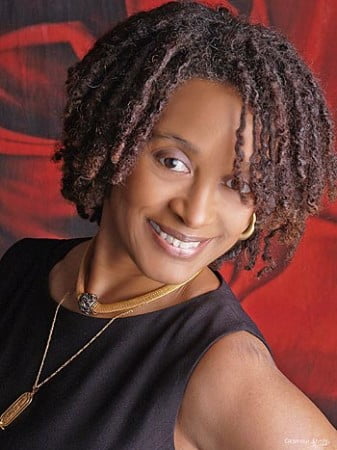
by Meta Commerse
Lately, I’ve noticed the omnipresent theme of forgiveness and repentance.
With a group from church, I attended a conference in August at the Montreat Center; its theme of racial healing stirred emotion and inspiration high among us. Little did we know, the Southern Presbyterian church as a denomination, was asking God’s forgiveness for its failure to act in the aid of Dr. Martin Luther King, Jr. when he was working for justice. What an eye-opening experience!
Shortly thereafter, I listened to a recorded message given at the Cathedral of All Souls by Rev. Michael Lapsley from South Africa, speaking on this subject, adding dimensions of reconciliation. Using the metaphor of a stolen bicycle, he said it was “time to give the bicycle back.” (Now, I ask what this would look like in South Africa!)
These are both beautiful, amazing examples of institutional repentance. The time has come to apply it in great and small places alike, since the age-old “man’s inhumanity to man” is a problem that knows no bounds and can therefore feel as omnipresent as this theme of forgiveness, repentance and reconciliation…
I heard Rev. Dr. William Barber offer a rousing sermon at the Unitarian Universalist Congregation of Asheville. He spoke of lamentation and the prophet Jeremiah, about hope, an enduring, unmovable, supernatural brand.
He told stories of his grandparents, quoting his grandfather, a Pentecostal minister, as saying, “You cannot cast out a demon without calling it by name,” and his grandmother, as she prepared to visit the sick, saying, “I’m going to hope somebody.” (That in the slave vernacular, the word “hope” was used in place of the word “help,” makes perfect sense.)
And, as he closed his message about how workers for justice must keep hope and run the marathon until the end, he quoted lyrics from the song, “If I Can Help Somebody,” (written by my grandmother).
Dr. Barber spoke about Mother Emanuel AME Church in Charleston, about our need to grieve and mourn the losses, the bloodshed, the suffering of our people. He spoke of the deep sickness of the one who took those nine lives that Wednesday night, and, most of all, of a culture that produces such sickness. He spoke of Dr. King as having expressed a similar concern for the sickness of those who bombed the Birmingham church in 1964, now proclaiming, “there are certain funerals America has refused to have.” He said that we live in a sorrowful state when it takes that much black blood to get an offensive flag removed more than 150 years after the Civil War.
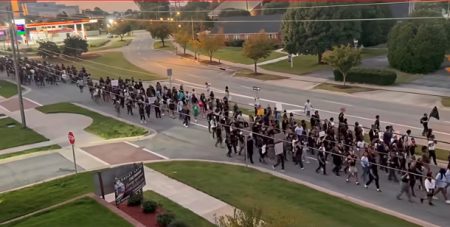
In the two years since Sobonfu Somé was last in Asheville, we have generally grown more aware of the rate at which our young men are either killed by police or incarcerated disproportionately for nonviolent crimes. This year alone, as communities in Ferguson, Baltimore and New York sort out their responses to the killings, we witnessed the brutal harassment of black children at a swimming pool, and the death of a young black woman in police custody. Thanks to social media, we now know in undeniable ways that in 2015 America, we are under siege.
It is clear that we as people of African descent and other non-white peoples continue to suffer the effects of racism passed on from generation to generation. This means we are prone to experiencing these effects in ways that translate into “health disparities.” We have grieving to do, grieving of losses older than we. And if for no other reason than the relief it brings, the indigenous grief ritual Sobonfu Somé offers us is a valuable resource to recognize and attend, for we have yet to grieve what has been taken. We have yet to grieve the assaults. On behalf of our black lives, those of our ancestors, and of our children, let us make time for this restorative work, make time for peace in our lives, peace on earth, peace as a result of forgiveness, repentance, and healing our grief.
Sponsored by the School of Integrated Living (SOIL), based out of Black Mountain, renown and beloved author and speaker, Sobonfu Somé from Burkina Faso, West Africa, will visit Asheville in November once again to lead our community in a weekend Grief Ritual. This retreat will touch the generational core of our woundedness. Although her work directly applies to people of African descent, anyone can benefit, because traditional Western culture includes almost no appreciation for grief or for the innate wisdom of our emotions.
Just as one person’s journey to wholeness can include the re-discovery, or grieving of their losses, likewise, our community can become more whole through sharing such life-changing experiences as the grief ritual Sobonfu leads, November 14-15, 2015. Imagine the possibilities!
Come join Sobonfu Somé at Jubilee, 46 Wall Street, at 7 p.m. on Friday, November 13, 2015, for an introductory talk. For details of events, and to register for the November 14 and 15 weekend grief ritual, call (828) 669-2204 or visit SOIL at www.schoolofintegratedliving.org.
Meta Commerse, M.A., M.F.A., C.W.P. is Director of Story Medicine of Asheville, a unique healing program. She is also an author, activist, and public speaker. Meta is also a professor of English and History at Haywood Community College. Her novel, The Mending Time, the flagship offering of Story Medicine Asheville Publications, was released in the fall of 2014. Meta is available to speak to your group on the healing power of story and other topics of interest. Contact her on Facebook.